3 Bedrooms | 2 Bathrooms | More Than 2,000 Sq. Ft. | Fenced Backyard | Optional Boating AccessPresented by Michael Downer, Broker Associate | Downing-Frye Realty | Quintessential NaplesMore Space,

Dated: July 21 2026
Views: 159
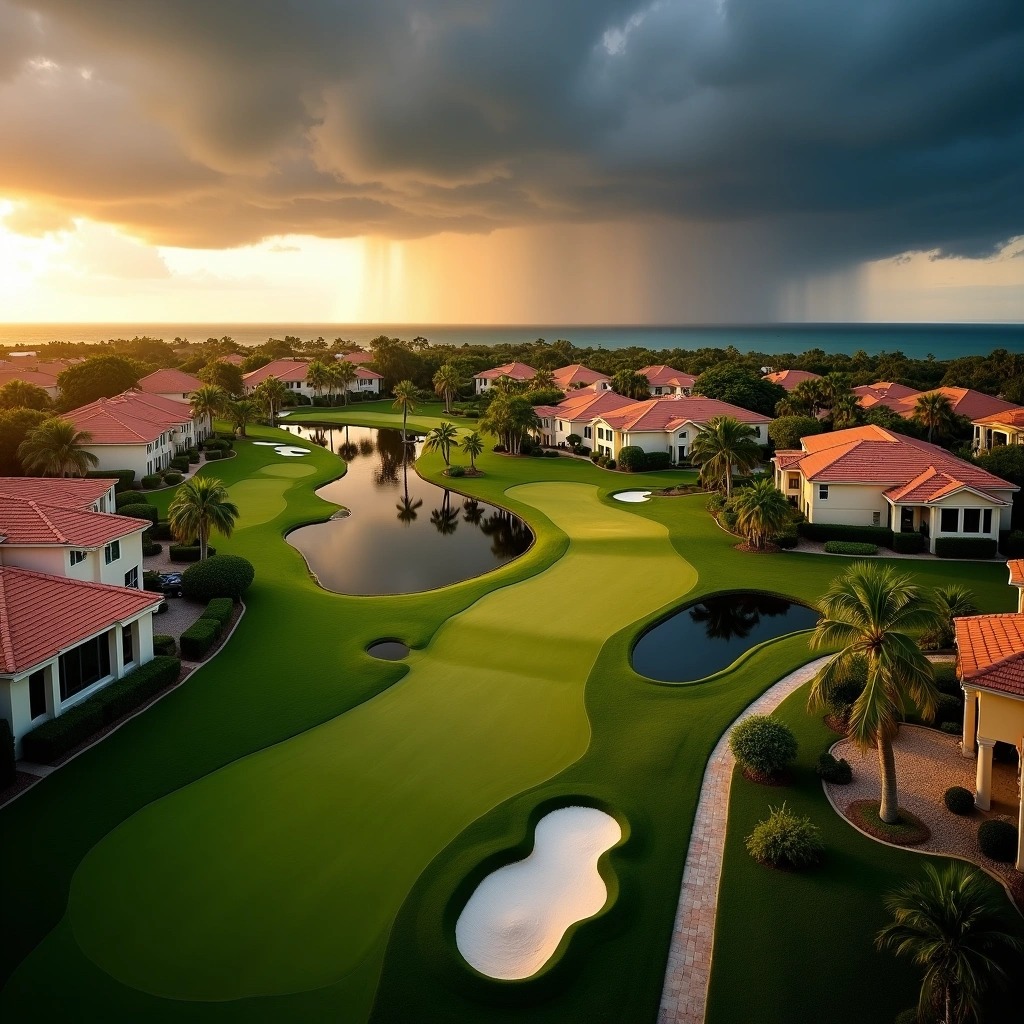
Naples golf communities face a critical paradox: while 99% of homes face severe flood risk within 30 years, property values continue to climb, with median prices reaching $640,032 in early 2025.
Essential insights for homeowners and buyers:
The data reveals that successful Naples golf community ownership in 2026 requires treating climate resilience as an essential investment criterion rather than an afterthought. Buyers who prioritize elevation, infrastructure quality, and community adaptation strategies position themselves to protect long-term value despite mounting environmental pressures. Climate change: Naples golf communities face a stark reality: 99% of Naples homes face severe flood risk within 30 years [21]. Median home prices reached $640,032 in January 2025, representing a 2.7% increase [21]. This paradox masks a financial challenge for homeowners. Insurance premiums average $2,228 each year through the NFIP[21] and have increased more than 70% since 2022[22]. For instance, every $1,000 increase in annual insurance costs decreases home values by more than $20,000 [21]. We'll explore what these realities mean for buying, selling, and protecting your investment in Naples golf communities homes for sale.
Image Source: Bundled Golf Communities
With nearly 100 courses spread across Collier County, Naples has 70 golf communities [23]. Buyers seeking bundled memberships, championship courses, and resort-style amenities flock to this concentration. Home prices span from $600,000 condominiums to estates exceeding $20 million[24]. The median price for single-family properties reached $900,000 in early 2026[2], reflecting sustained interest in golf course living despite mounting climate pressures.
Golf course homes command higher prices than comparable non-golf properties. Fairway frontage drives the strongest premiums, with pricing tied directly to the club's financial health and membership structure [24]. Communities with sound clubs and active rosters are more valuable than those facing aging infrastructure or membership shortfalls [24]. Therefore, buyers prioritize communities with strong operational fundamentals among location and course quality.
, climbing to $800,000Property values grew 6.7% from January to May 2026[2]. The market now has 6.6 months of housing supply, down from the pandemic-era frenzy. This suggests balanced conditions after years of seller advantage[2]. Single-family homes maintain stronger value retention than condominiums, which experienced price drops ranging from 2.7% to 8.1% depending on the market segment[2].
Active listings increased 30.9% year-over-year to 4,746 properties[2]. Buyers now have more selection than in recent years. But inventory decreased by 22% when measured differently, falling from 6,790 homes to 5,299 homes [3]. This apparent contradiction reflects different measurement methodologies, but both sources confirm that buyer interest continues to absorb available homes at a healthy pace.
Closed sales jumped 13.9% in May 2026, while pending sales rose 12.1% compared to May 2025[3]. These gains signal sustained buyer interest across Naples and Southwest Florida[3]. Properties now remain on the market 89 to 90 days on average[2], up 58.9% from previous years[2]. This extended timeline gives buyers more time to conduct due diligence rather than rushing into bidding wars.
Golf community real estate attracts strong interest. Communities offering immediate golf memberships generate substantial buyer interest, as inventory remains limited [3]. The luxury segment demonstrates resilience, with May 2026's top-ten sales ranging from $5.8 million to $14.1 million [3]. Pelican Bay dominated this list with multiple condominium sales ranging from $5.8 million to $14.1 million, selling at 88% to 101% of list price[3]. Gray Oaks followed with single-family home sales from $6.5 million to $10.7 million[3].
Communities like Gray Oaks, Mediterra, Talis Park, and Quail West continue to draw strong interest due to access to championship golf and limited membership numbers[4]. Quail West recorded two sales in May's top ten, at $8 million and $7.55 million, both selling between 91% and 94% of asking price[3]. Talis Park contributed a $5.895 million sale at full list price[3].
Competition intensifies in desirable golf neighborhoods as inventory tightens[4]. Buyers face reduced inventory compared to last year, increased competition for well-positioned homes, and continued upward pressure on single-family property prices [3]. For instance, long-standing communities benefit from limited inventory and stable club operations, which support buyer interest [24]. The Club at Olde Cypress exemplifies this pattern[24].
Sellers benefit from lower inventory levels, increased buyer activity, higher closed sales volume, and strong pricing for homes presented properly [3]. Properties with realistic pricing and professional staging receive market rewards. The data confirm this isn't a market slowdown but rather a healthy, active rebalancing phase following pandemic-era disruptions [4].
"Florida’s long coastline and low-lying land make it particularly vulnerable to the damaging impacts of sea level rise. Every additional inch of sea level rise will increase the economic risks Florida faces from flooding, which will threaten more property and infrastructure." — Resources for the Future, Research organization.
Naples geography creates inherent vulnerability for golf communities. The city sits close to sea level, with an underground water supply just below the ground surface [25]. The Gulf of Mexico fronts the entire western edge, while Moorings Bay and Naples Bay wind through the city alongside complex canal systems[25]. Rainwater has nowhere to drain during heavy rain events, especially at high tide. Street and yard flooding occurs in the lowest-lying areas [25].
Flooding drives the most common natural disaster risk in the United States. 90% of all presidential-declared U.S. natural disasters involve flooding[26]. Communities in low-lying areas, coastal regions, or downstream of large bodies of water are vulnerable [26]. Even an inch of water can cause expensive property damage. Two feet of floodwater can sweep away a car[26].
Climate change in Naples, Florida, intensifies these baseline risks. Currently, Naples Heritage Golf and Country Club faces a flood risk of 53.9% of properties [5]. That figure climbs to 89.2% of properties within 30 years[5]. A severe flooding event today would affect 16 properties in this community, but the same likelihood of an event would affect 27 properties three decades from now [5]. Higher sea levels and stronger storms from climate change increase flooding nationwide [5].
The data reveals an unsettling pattern: 98% of properties in Naples face flood risk [6]. 25% of flooding occurs outside areas formally designated as flood-prone Special Flood Hazard Areas[26]. Homeowners who believe their golf community properties sit outside flood zones remain exposed to considerable risk.
Recent hurricane seasons demonstrate growing impacts on Naples, Florida, golf communities. Hurricane Irma struck Marco Island in 2017 as a Category 3 storm with sustained winds of 112 mph, just miles south of the city limits of Naples [26]. The evacuation displaced an estimated 6.5 million Floridians and marked the largest evacuation in state history[26].
Hurricane Ian delivered catastrophic consequences in 2022. The Category 4 storm made landfall in southwestern Florida and produced catastrophic storm surge, damaging winds, and historic freshwater flooding in central and northern Florida[26]. Ian caused over 150 direct and indirect deaths and over $112 billion in damage. This made it the most costly hurricane in Florida history and the third most costly in United States history [26].
The 2024 hurricane season brought successive blows. Hurricane Helene made landfall in the Florida Big Bend region as a Category 4 hurricane on September 27th, 2024[26]. The storm caused flooding in portions of Naples, with some areas experiencing flood depths of 30+ inches [26]. Helene killed at least 250 people in the United States, including at least 176 direct deaths. This made it the deadliest hurricane in the contiguous U.S. since Hurricane Katrina in 2005 [26].
Hurricane Milton followed weeks later and reached Category 5 intensity with minimum central pressure below 900 mb[26]. Milton made landfall on October 10th, 2024, at Siesta Key and caused flooding throughout many areas of Naples, with depths ranging from inches to nearly four feet[26].
Storm surge represents one of the most destructive hurricane forces. Powerful winds push enormous ocean water volumes toward land when hurricanes approach coastal areas[27]. This surge causes sudden sea-level rises far beyond normal tides [27]. Flat, shallow coastal waters in Naples allow surges to push farther inland and inundate waterfront properties [27]. The force floods low-lying areas, erodes shorelines, and compromises building foundations[27]. Waterfront homes face weakened foundations, damaged seawalls, and heightened vulnerability to future storms without protective measures[27].
Maintaining Naples golf courses presents growing challenges as climate patterns change. Florida's subtropical climate means courses experience high temperatures, intense humidity, and heavy rainfall[28]. These conditions stress grass, especially varieties unsuited to Florida's climate [28]. Heat stress reduces turf quality, increases disease susceptibility, and degrades course aesthetics [28].
Water scarcity poses a challenge to the golf industry[29]. Climate change and water scarcity threaten individual golf course businesses [29]. Customers expect to play on turf, not dirt[29]. Golf courses in the United States account for just 1.3% of all water drawn for irrigation[29]. Florida faces water restrictions due to its vulnerability to drought [28].
Golf courses have reduced water consumption by 30% since 2005 through improved irrigation practices[29]. Maintaining premium turf remains resource-intensive nonetheless. Florida's humidity encourages fungal growth and turf diseases, while heavy rains from tropical storms create waterlogged conditions, root rot, and unplayable areas [28]. Courses require sophisticated irrigation systems that adjust watering schedules based on weather conditions and comply with environmental regulations [28].
Image Source: Harbor Insurance
"It’s not hyperbole to say that the United States may very well be on the brink of a homeowners insurance crisis, at least in its coastal areas." — Senator Sheldon Whitehouse, Chair of the Senate Budget Committee.
Standard homeowners insurance excludes flood damage coverage. Property owners must purchase separate flood insurance policies through the National Flood Insurance Program or private insurers. Properties with federally backed mortgages are subject to mandatory coverage requirements in Special Flood Hazard Areas [30]. This includes FHA, VA, USDA, and conventional loans [31].
The NFIP provides coverage through 47 participating insurance companies. It protects 4.7 million policyholders nationwide with nearly $1.30 trillion in coverage[30]. Coverage limits max out at $250,000 for single-family dwelling structures and $100,000 for contents, though[32][31]. Citizens Property Insurance Corp. policyholders with wind coverage require flood insurance when dwelling coverage reaches $400,000 or more[33].
Premium costs vary dramatically based on risk factors. Southwest Florida moderate-risk zones cost $900 to $2,000 annually. High-risk coastal properties pay $3,500 to $15,000+[31]. Naples coastal homes frequently exceed $5,000 in annual premiums [31]. The average annual cost of a Florida NFIP policy is $938[33], but Naples residents pay an average of $2,502 for homeowners insurance annually[34].
Risk Rating 2.0 implementation began in 2021. It recalculated premiums to reflect actual flood risk rather than subsidized historical rates[31]. Collier County appears among the counties where rates are set to jump the most [33]. Around 77% of policyholders experience premium increases averaging $10 to $20 per month initially, with annual increases capped at 18% per year[31]. Properties elevated above Base Flood Elevation pay 30-60% less[31].
Coverage begins 30 days after purchase unless mandated by a lender or related to community flood map changes[30][32]. This waiting period prevents last-minute purchases ahead of approaching storms.
HOA dues fund regular operations and long-term reserve accounts for component maintenance and replacement[35]. Boards deposit a percentage of monthly dues into reserve funds. This creates savings for roofing, heating systems, clubhouses, and pools[35]. Golf communities face increasing costs of maintaining courses, landscaping, and amenities in challenging climate conditions.
Mortgage underwriters count recurring HOA dues in debt-to-income calculations[36]. Lenders may also consider certain one-time fees when assessing borrower profiles [36]. Higher HOA assessments directly affect purchasing power and loan qualification.
Elevation relative to FEMA's Base Flood Elevation affects value more substantially than flood zone designation alone[37]. Homes below BFE face higher flood insurance premiums and stricter lending requirements. They also face longer market time[37]. Properties elevated above required levels attract higher offers and provide long-term insurance savings[37].
Two homes in similar flood zones can have different insurance premiums and resale values based purely on elevation[37]. Elevation certificates now serve as selling points, especially for properties priced over $2 million[37].
Special assessments occur when unexpected costs exceed monthly dues and reserve funds[35]. These one-time fees address emergencies, natural disasters, or events that could not have been planned financially[35]. Assessment amounts vary based on project cost and unit count[35].
Boards may require lump-sum payments or smaller installments added to monthly dues [35]. Frequent or expensive special assessments reduce property appeal and may cause lenders to reject loans altogether[35]. Underfunded reserves signal a high risk of special assessments for prospective buyers[38].
Naples follows the Florida Building Code 8th Edition (2023), which became mandatory on December 31, 2023 [7][11]. This code ranks among the most rigorous in the nation. It was designed to reduce loss of life and property from hurricanes. Homes must withstand wind speeds of up to 180 mph, depending on location [7]. All windows and doors require impact-rated construction or approved hurricane shutter protection[7]. Roofs, walls, and foundations must be tied together structurally to resist uplift and lateral forces [7].
The code incorporates requirements from the National Flood Insurance Program and the ASCE 24 standards [11]. Any work to erect, construct, alter, repair, move, demolish, or change building occupancy requires a permit [11]. The 8th Edition adopts the ASCE 7-22 standards, including updated wind speed maps and design criteria that affect structural calculations [11]. Roofing underlayment requirements and fastening schedules now align with ASCE 7-22 wind loads and testing standards [11].
All new construction and substantial improvements must comply with the flood provisions of the current Florida Building Code [1]. This applies to Special Flood Hazard Areas. Collier County requires the lowest living floor to be elevated above Base Flood Elevation by 1 foot [12]. The lowest living floor must also sit 18 inches above the crown of paved roads or 24 inches above unpaved road crowns[12]. These standards exceed NFIP requirements.
The substantial improvement rule triggers compliance mandates. The entire structure must comply with current floodplain regulations if repair or improvement costs exceed 50% of the building's market value [7]. This could require raising the foundations, floodproofing, or a complete structural overhaul[7]. Permit approvals, flood insurance eligibility, and future resale options are affected by failure to comply[7].
Elevation certificates document compliance and determine flood insurance rates. The City of Naples requires elevation certificates when structures are subject to substantial damage or substantial improvement determinations[1].
Techniques to modernize homes fall into three categories: dry floodproofing, wet floodproofing, or elevation [12][8]. Dry floodproofing attempts to exclude floodwaters through sealed facades and backflow valves[8]. FEMA does not recommend this method for residential structures, nor does it offer premium discounts[8]. NFIP rules prohibit floodproofing residential buildings below the Base Flood Elevation [1].
Wet floodproofing allows controlled entry of floodwater through flood vents or breakaway walls and normalizes hydrostatic pressure [8]. The City of Naples is developing a Climate Adaptation Plan following a Climate Vulnerability Assessment funded by a $387,255 grant from the Florida Department of Environmental Protection[13]. The assessment looks at compound flooding from rainfall and sea-level rise [13].
Naples and Collier County moved forward with a joint $5.79 million project to address drainage failures within Big Cypress Golf and Country Club Estates and The Country Club of Naples [10]. The first phase installs two electric-powered stormwater pumping stations designed to relieve drainage, flooding, and standing water issues[10]. The second phase targets drainage improvements and water main updates, including regrading swales and replacing driveway culverts to increase stormwater capacity [10].
The county manages to maintain the updated stormwater infrastructure, which enhances flood resilience and community safety[14]. These improvements address long-standing problems that affect course playability and surrounding properties.
Golf courses adapt their designs to accommodate the realities of flooding. Elevated greens and tees, proper fairway contouring, and strategically placed dams minimize damage during flood events[15]. Bunker design receives particular attention. Stabilization layers prevent gravel and sand from mixing while maintaining drainage functionality during severe storms [15].
Water storage represents another critical adaptation. Emergency storage ponds stockpile water for drought periods. Some continental European courses build facilities that hold more than 100,000 cubic meters[15]. The Oleander Course reimagines existing drainage infrastructure to boost tidal flows and support marshland migration in response to sea-level rise [16].
Golf courses function as green infrastructure within urban areas. Golf courses cover just over 9,300 square kilometers across the United States, with 14,200 courses [17]. Nature-based solutions have the potential to reduce emissions by 10 gigatons of CO2 per year, exceeding the emissions from the entire global transportation sector [9]. Golf courses act as carbon sinks when designed and managed properly. They increase biodiversity, restore wetlands, and manage invasive species [9].
The county's Community Emergency Response Team trains residents in disaster response skills through 24 hours of classroom and hands-on instruction[18]. The training covers disaster preparedness, medical operations, fire safety, and light search and rescue[18]. The county's Emergency Management Department coordinates activities to build community capability in mitigation, preparation, response, and recovery [19]. Special needs shelters serve residents with disabilities or those requiring medical care beyond simple first aid. Preregistration ensures space for those with the greatest need [20].
Image Source: Naples Golf Guy
Major real estate sites now incorporate flood risk data on property listings. Redfin began publishing this information in February 2021. Research shows buyers who encountered high Flood Factor scores adjusted searches toward less flood-prone homes. But 23 states don't require sellers to disclose flood history, including Florida. Properties exposed to higher flood risk are overvalued by $121 billion to $237 billion nationally. They don't properly factor in future damage costs.
Naples offers 25+ private and bundled golf communities. Homes range from $600,000 condominiums to $20 million+ estates. Bundled communities include golf privileges with ownership and appeal to buyers wanting predictable costs. Esplanade, Heritage Bay, and Treviso Bay represent strong bundled options. Non-bundled private clubs like Gray Oaks require separate membership but offer flexibility. Golf course homes sell for 7.6% more nationally. Some Naples properties command 25-30% premiums due to scenic views and protected green space.
Environmentally responsible luxury properties command 2.7% higher prices and sell 9 days faster than conventional homes. Elevation above Base Flood Elevation reduces insurance premiums by 30-60% and increases resale appeal—communities with strong club operations and limited inventory support ongoing buyer interest.
Review the membership structure, the club's financial health, and location carefully. North Naples offers newer communities with bundled options. Central Naples features older neighborhoods closer to beaches and medical facilities. Fairway homes command higher prices. Interior lots provide more privacy.
Naples golf communities face undeniable climate pressures, from escalating flood risks to rising insurance costs that directly affect property values. Strong buyer demand persists nonetheless as communities adapt through infrastructure upgrades and nature-based solutions. We've seen how elevation certificates, drainage improvements, and strategic community selection make substantial differences in long-term protection of value.
Your success depends on thorough research before committing, given these evolving realities. Review flood zones, club financials, and adaptation investments carefully. The market rewards informed buyers who recognize climate resilience as a must, not a choice. Naples golf community ownership remains a viable investment for those prepared to handle this changing environment with proper due diligence.
Real estate should feel confident, not complicated.
Through clear communication and structured guidance, the Quintessential Naples Team at Downing-Frye Realty simplifies complex transactions without sacrificing precision or professionalism.
#QuintessentialNaples
#Downing-FryeRealty
#NaplesRealEstate
#NaplesLuxury
#NaplesLuxuryRealEstate
#LuxuryHomesInNaples
#TrustedRealEstateAdvisor
#GenerationalWealth
#LuxuryLifestyle
#SouthwestFloridaRealEstate
Q1. What is the real estate market outlook for Naples golf communities in 2026? The Naples golf community market in 2026 shows strong buyer demand with median single-family home prices reaching $900,000. Active listings increased 30.9% year-over-year, while closed sales jumped 13.9% in May 2026. Properties now spend approximately 89-90 days on the market, giving buyers more time for due diligence compared to previous years' rushed conditions.
Q2. How does flood risk affect property values in Naples golf communities? Flood risk significantly affects the values of Naples' golf communities, with 98% of properties facing some level of flood exposure. Every $1,000 increase in annual insurance costs decreases home values by more than $20,000. However, homes elevated above Base Flood Elevation can reduce insurance premiums by 30-60% and maintain stronger resale appeal.
Q3. What are the insurance costs for homeowners in the Naples golf community? Homeowners in Naples' golf community face substantial insurance expenses. The average NFIP flood insurance policy costs $2,502 annually in Naples, while coastal properties can pay $3,500 to $15,000+ per year. Standard homeowners insurance averages $2,228 annually, with total insurance costs having increased over 70% since 2022.
Q4. Which Naples golf communities offer the best long-term value? Communities like Gray Oaks, Mediterra, Talis Park, and Quail West demonstrate strong long-term value due to access to championship golf, limited memberships, and well-maintained grounds. Bundled communities such as Esplanade, Heritage Bay, and Treviso Bay offer predictable costs, with golf privileges included in the purchase price, appealing to buyers seeking comprehensive amenities.
Q5. What climate adaptations are Naples golf communities implementing? Naples golf communities are investing in drainage and stormwater management upgrades, including electric-powered pumping stations and enhanced swale systems. Communities are redesigning courses with elevated greens, improved bunker stabilization, and emergency water storage ponds. Many are also implementing nature-based solutions and community emergency preparedness programs to build resilience.
[1] - https://www.naplesgov.com/building/page/development-floodplain
[3] - https://naplesgolfguy.com/naples-real-estate-market-report-may-2026/
[4] - https://naplesgolfguy.com/naples-real-estate-market-march-2026/
[5] - https://firststreet.org/neighborhood/naples-heritage-golf-and-country-club-fl/93279_fsid/flood
[6] - https://floodriskamerica.com/blog/naples-flood-risk/
[7] - https://www.guardianhurricaneprotection.com/naples-hurricane-bulding-code/
[9] - https://www.drivingthegreen.golf/dtg-blog/cop-28-golf-as-nature-based-solution
[12] - https://www.collier.gov/Business-Resources/Floodplain-Management/Building-Within-the-Floodplain
[13] - https://www.naplesgov.com/naturalresources/page/resiliency-and-sustainability
[14] - https://www.collierstormwaterbigcypress-naplesgolf.com/
[15] - https://golfsustainable.com/en/golf-course-design-2-0/
[16] - https://www.designworkshop.com/ideas/25-04-jekyll-island.html
[17] - https://www.sciencedirect.com/science/article/pii/S0169204620315061
[18] - https://www.colliersheriff.org/community-resources/community-emergency
[19] - https://www.collier.gov/Public-Safety/Emergency-Management
[20] - https://collier.floridahealth.gov/programs-and-services/emergency-preparedness-and-response/
[22] - https://susanpcrawford.substack.com/p/why-naples-fl-could-lead-the-way
[23] - https://gulfandgreensluxury.com/moving-to-naples-florida-golf-communities/
[24] - https://www.mattbrownrealestate.com/blog/living-in-a-golf-community/
[25] - https://www.naplesgov.com/building/page/floodplain-information
[26] - https://www.naplesgov.com/building/page/floods-storms-hurricane-facts
[28] - https://veransa.com/challenges-to-maintaining-a-florida-golf-course/
[29] - https://syngentagolf.shorthandstories.com/how-golf-can-become-water-sustainable/
[30] - https://www.fema.gov/flood-insurance
[32] - https://www.naplesgov.com/building/page/flood-insurance-are-you-covered
[33] - https://www.nerdwallet.com/insurance/homeowners/learn/flood-insurance-florida
[34] - https://www.policygenius.com/homeowners-insurance/florida/naples/
[35] - https://www.reserveadvisors.com/resources/blog/dues-special-assessments-and-reserves/
[36] - https://cavanaughluxurygroup.com/blog/understanding-hoa-fees-in-scottsdale-golf-communities

Your Luxury REALTOR®, Trusted Advisor — Quintessential Naples Team at Downing-Frye Realty®Michael "Mike" Downer is the REALTOR® you want in your corner when buying or selling real es....
3 Bedrooms | 2 Bathrooms | More Than 2,000 Sq. Ft. | Fenced Backyard | Optional Boating AccessPresented by Michael Downer, Broker Associate | Downing-Frye Realty | Quintessential NaplesMore Space,
Newly Renovated | Impact Windows | New Appliances | Room for a Pool | No HOA | Golden Gate CityPresented by Michael Downer, Broker Associate | Downing-Frye Realty | Quintessential NaplesLess Fixing.
4 Bedrooms | 2 Bathrooms | Lakefront Pool Home | Reflection Lakes Presented by Mike Downer, Broker Associate | Downing-Frye Realty | Quintessential NaplesA Little More Time to Enjoy FloridaSome
2 Bedrooms | 2 Bathrooms | First-Floor Residence | Bonita SpringsPresented by Mike Downer, Broker Associate | Downing-Frye Realty | Quintessential NaplesA Simple Way to Enjoy Southwest
 All information regarding a property for sale, rental or financing, school information and public tax records is from sources deemed reliable; PROVIDED, HOWEVER, that representations and warranties are not made about the accuracy thereof, and such information is subject to errors, omissions, updates, modifications, changes of price, rent rates, commissions, prior sales, leases or financing, changes in school boundaries, or withdrawal without notice. All information displayed on this Website should
be independently verified if any person intends to engage in a transaction based upon such information.
Show More...
All information regarding a property for sale, rental or financing, school information and public tax records is from sources deemed reliable; PROVIDED, HOWEVER, that representations and warranties are not made about the accuracy thereof, and such information is subject to errors, omissions, updates, modifications, changes of price, rent rates, commissions, prior sales, leases or financing, changes in school boundaries, or withdrawal without notice. All information displayed on this Website should
be independently verified if any person intends to engage in a transaction based upon such information.
Show More...
 © 2026 Florida Gulf Coast MLS (FGCMLS) Information deemed reliable, but not guaranteed. The IDX data relating to real estate for sale on this web site comes in part from the Florida Gulf Coast Multiple Listing Service. The information being provided is for consumers' personal, non-commercial use and may not be used for any purpose other than to identify prospective properties consumers may be interested in purchasing. Information is deemed reliable but not guaranteed.
 This data is up-to-date as of September 25, 2026 6:55 PM UTC Some properties that appear for sale on this website may subsequently have sold and may no longer be available. For the most current information, contact Downing-Frye Realty.
The information provided is for consumers' personal, non-commercial use and may not be used for any other purpose. The data relating to real estate for sale on this website comes in part from the Broker Reciprocity Program (BR Program) of M.L.S. of Naples, Inc.,
Florida Gulf Coast MLS, Marco Multi-List, Inc., My Florida Regional MLS, or Miami Association of Realtors. Properties listed with brokerage firms other than Downing-Frye Realty are marked with the BR Program Icon or the BR House Icon and detailed information about them includes the name of the listing brokers. The properties displayed may not be all the properties available through the BR Program. The data provided by the Broker Reciprocity Program, and the Information is Deemed Reliable But Not Guaranteed. The source of the information about real property available for sale or rent is the copyrighted and proprietary database of the M.L.S. of Naples, Inc., Florida Gulf Coast MLS, Marco Multi-List, Inc., My Florida Regional MLS, or Miami Association of Realtors. Copyright 2026 M.L.S. of Naples, Inc., Florida Gulf Coast MLS, Marco Multi-List, Inc., My Florida Regional MLS, Miami Association of Realtors.; all rights reserved.
Show More...
This data is up-to-date as of September 25, 2026 6:55 PM UTC Some properties that appear for sale on this website may subsequently have sold and may no longer be available. For the most current information, contact Downing-Frye Realty.
The information provided is for consumers' personal, non-commercial use and may not be used for any other purpose. The data relating to real estate for sale on this website comes in part from the Broker Reciprocity Program (BR Program) of M.L.S. of Naples, Inc.,
Florida Gulf Coast MLS, Marco Multi-List, Inc., My Florida Regional MLS, or Miami Association of Realtors. Properties listed with brokerage firms other than Downing-Frye Realty are marked with the BR Program Icon or the BR House Icon and detailed information about them includes the name of the listing brokers. The properties displayed may not be all the properties available through the BR Program. The data provided by the Broker Reciprocity Program, and the Information is Deemed Reliable But Not Guaranteed. The source of the information about real property available for sale or rent is the copyrighted and proprietary database of the M.L.S. of Naples, Inc., Florida Gulf Coast MLS, Marco Multi-List, Inc., My Florida Regional MLS, or Miami Association of Realtors. Copyright 2026 M.L.S. of Naples, Inc., Florida Gulf Coast MLS, Marco Multi-List, Inc., My Florida Regional MLS, Miami Association of Realtors.; all rights reserved.
Show More...
