3 Bedrooms | 2 Bathrooms | More Than 2,000 Sq. Ft. | Fenced Backyard | Optional Boating AccessPresented by Michael Downer, Broker Associate | Downing-Frye Realty | Quintessential NaplesMore Space,

Dated: April 17 2026
Views: 178
Key Takeaways
Florida 4-point inspections are essential evaluations that can make or break your insurance coverage and property value. Understanding when they're required and what they cover helps homeowners navigate insurance requirements effectively.
• Insurance companies require 4-point inspections for homes over 25-30 years old, especially during policy renewals or property purchases in Florida's high-risk hurricane zones.
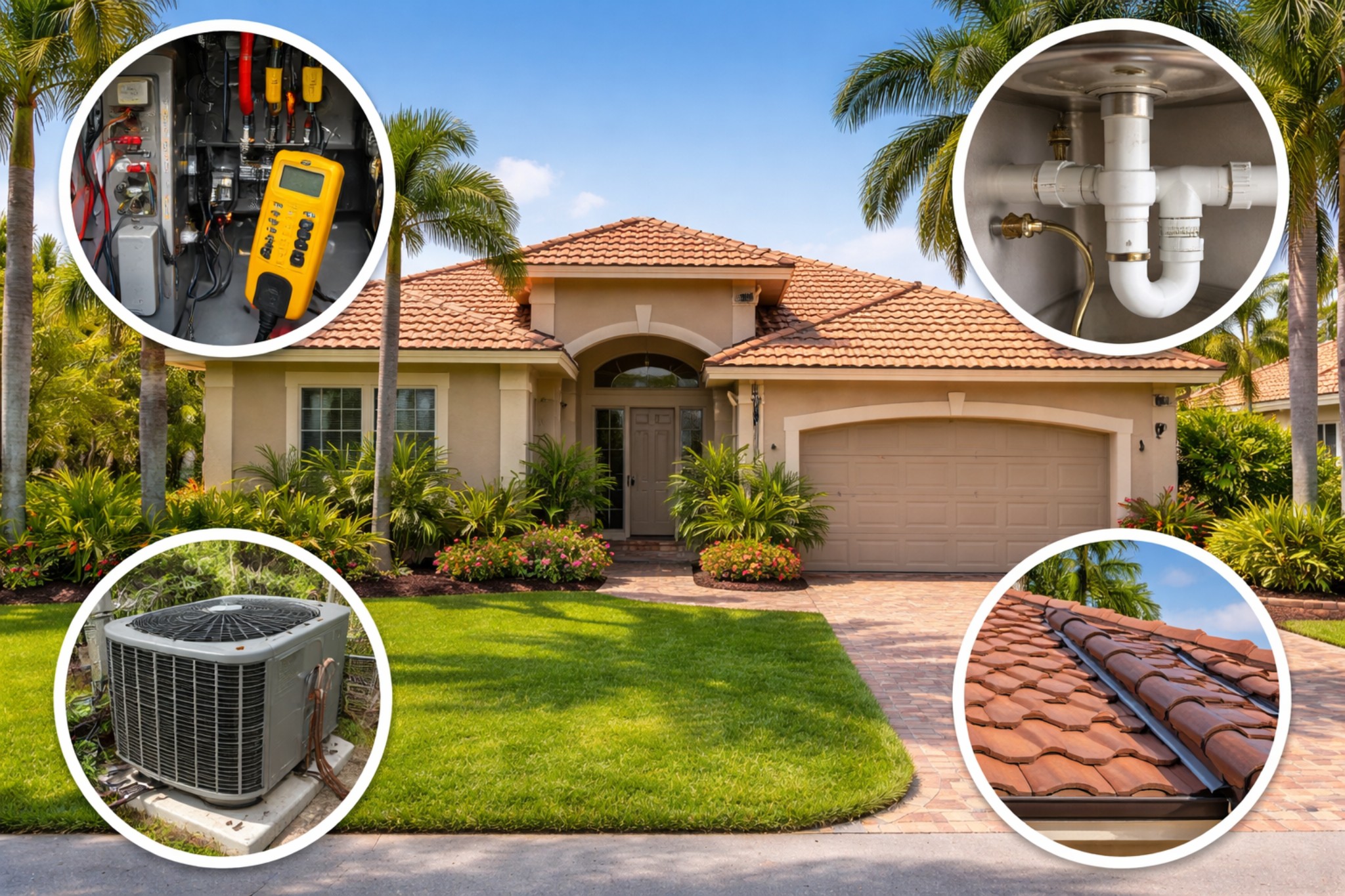
• The inspection covers four critical systems: roofing, electrical, plumbing, and HVAC, focusing on age, condition, and safety rather than comprehensive property evaluation.
• Costs range from $75-$175, with inspections taking 45-90 minutes, making them faster and more affordable than full home inspections while providing essential insurance documentation.
• Reports remain valid for 12 months with most insurers, though switching companies may require fresh inspections even within this timeframe.
• Proactive inspections help identify safety hazards and maintenance needs while ensuring your property meets insurance underwriting standards before coverage issues arise.
The inspection serves as your gateway to maintaining homeowners' insurance in Florida, particularly for older properties where system failures become more likely and costly for insurers to cover.
What is a Florida 4 Point Inspection?
A Florida 4-point inspection is a specialized evaluation of a property that examines four critical systems: roofing, electrical, plumbing, and HVAC (heating, ventilation, and air conditioning). Insurance companies commonly require this inspection when issuing or renewing homeowners' insurance policies, especially for older properties. The main goal is to assess the condition and safety of these systems and determine a property's insurability.
A licensed Florida inspection professional conducts the evaluation. This includes home inspectors, general contractors, residential contractors, or building contractors. The inspection takes about one hour to complete. These four systems represent the most common sources of insurance claims in aging homes, so insurers use the assessment to evaluate risk levels and establish coverage terms.
The inspection examines:
A complete home inspection evaluates the entire property, including appliances, foundations, drainage, windows, and doors. The 4-point inspection limits its scope to these four systems. This focused approach enables a faster, more budget-friendly assessment while providing insurance companies with information on components most likely to generate claims.
The inspection serves multiple functions beyond insurance requirements. Homeowners benefit from identifying potential safety hazards and recognizing areas that need repair or replacement. They also learn about the maintenance status of major home systems. Insurance companies use the detailed report to determine whether a property meets underwriting standards, as aging systems increase the likelihood of failures that could lead to costly claims.
When is a 4 Point Inspection Required in Florida?
Insurance companies mandate 4-point inspections for insurance purposes based on specific property characteristics and transaction types. The requirements vary by insurer, but several common scenarios trigger inspection requests.
Homes Over 25 Years Old
Age is the main factor determining the need for inspection. Insurance providers require 4-point inspections for homes over 25 to 30 years old, though some companies set lower thresholds. Properties between 15 and 30 years old are often subject to inspection requirements. Certain insurers request evaluations of homes as young as 15 years old. The variation stems from individual company risk assessment policies and underwriting standards. System failures become more likely as homes age, which can result in costly claims for insurers.
Insurance Policy Changes or Renewals
Policy renewals for older properties often necessitate updated 4-point inspections. Insurance companies request these evaluations to reassess risk levels and verify that critical systems remain functional and safe. Homeowners renewing policies on properties between 4 and 30 years old may receive inspection requests. Aging structures experience wear and tear, increasing the likelihood of repair. The inspection report must be dated within 30 days prior to insurance application submission, though each company establishes its own acceptable timeframe.
Buying or Selling Older Properties
Property transactions with older homes trigger inspection requirements for homebuyers seeking insurance to close mortgages. Buyers purchasing homes 15 years or older need 4-point inspections to meet insurer coverage standards. Sellers benefit when they obtain inspections in advance to improve property insurability and attractiveness to potential buyers. Recent renovations do not eliminate the necessity for inspection, as documentation of updates remains crucial for qualifying for coverage.
High-Risk Hurricane Zones
Florida's severe weather history and climate conditions create elevated insurance risks, prompting stricter inspection policies. Hurricanes and heavy rainfall, combined with extreme heat and high humidity, accelerate home aging compared to other regions. Insurance carriers face higher claim frequencies due to weather-related damages in these areas. They require verification that roofing, electrical systems, plumbing, and HVAC systems maintain good working order before writing or renewing policies. Some companies refuse coverage for homes older than 20 years without completed inspections.
What Does a Florida 4 Point Inspection Cover?
Inspectors review four distinct systems during this assessment. They analyze specific components within each category to identify potential risks and determine insurability compliance.
Roof System Assessment
Inspectors assess the roof's type, age, condition, and visible signs of damage or deterioration. The assessment has analyzed roofing materials, such as shingles, tiles, or metal panels, for wear, damage, or missing pieces. Different roof types carry varying lifespans. Asphalt roofs are expected to last around 20 years, and metal roofs last at least 40 years. Insurance companies may require documentation confirming at least 5 years of remaining useful life for roofs older than 15 years for shingles or 20 years for tile or metal. Inspectors identify cracked, curling, or missing shingles, as well as excessive granule loss. They also spot missing fasteners, leaks, and faulty repairs. The assessment extends to flashing that seals vulnerable areas such as roof edges, chimneys, and vents, as well as ventilation systems.
Electrical System Review
Inspectors review the wiring type and the condition of the electric panel. They identify safety hazards such as exposed wiring or outdated components. Unacceptable components include aluminum branch wiring, double-tapped breakers, knob-and-tube wiring, and Federal Pacific Electrical Panels. The inspection verifies compliance with local building codes and proper grounding. It also checks the appropriate electrical system sizing for the home. Faulty electrical systems represent a leading cause of residential fires.
Plumbing System Assessment
The inspection covers water heater age and plumbing types, including pipe materials. Inspectors check for leaks or other issues. They note whether plumbing has been updated or re-piped. Homes with polybutylene or galvanized pipes are at high risk due to rust, clogging, and a tendency to fail.
HVAC System Inspection
Inspectors review the age, condition, operational status, and visible damage of heating, ventilation, and air conditioning systems. The assessment has checked wood-burning stoves or central gas fireplaces for professional installation. Inspectors verify full functionality and proper maintenance. They assess the efficiency of temperature regulation and identify safety concerns, such as gas leaks or improper ventilation.
Florida 4 Point Inspection Cost and Practical Considerations
Typical Cost Range
Pricing for this inspection ranges from $75 to $175. Homeowners pay an average of $125. Costs vary based on property size, location, and inspector experience. Bundled pricing with wind mitigation inspections reduces total expenses. Both services together range from $125 to $325. Some inspection companies offer discounts when you schedule multiple services at once. Combined rates run around $175 to $180.
How Long Does the Inspection Take
The on-site evaluation requires 45 to 90 minutes. Most properties finish closer to 45-60 minutes. Larger homes or those with multiple HVAC units may extend to 90 minutes. The focused scope examines only four systems. This makes the process much faster than complete home inspections.
Validity Period for Insurance
Insurance carriers accept reports dated within the last 12 months prior to policy application. Most insurers require inspections completed within this timeframe for new policies. Switching insurance companies may require a fresh inspection. This applies even if an existing report remains within the accepted period.
4 Point Inspection and Wind Mitigation Differences
Wind mitigation inspections assess a home's capacity to withstand high winds and storms. They evaluate construction elements like roof-to-wall attachments and hurricane shutters. The 4-point inspection focuses on the age, condition, and life expectancy of roofing, electrical, and HVAC systems. Wind mitigation reports identify fortification opportunities. These reduce the risk of wind damage and potentially lower insurance premiums.
Luxury real estate in Naples deserves more than guesswork—it deserves strategy.
The Quintessential Naples Team at Coldwell Banker Realty delivers a thoughtful, data-driven approach rooted in local insight, lifestyle understanding, and proven negotiation principles to help customers make smart, lasting real estate decisions.
#QuintessentialNaples
#ColdwellBankerRealty
#NaplesRealEstate
#NaplesLuxury
#NaplesLuxuryRealEstate
#LuxuryHomesInNaples
#TrustedRealEstateAdvisor
#GenerationalWealth
#LuxuryLifestyle
#SouthwestFloridaRealEstate
FAQs
Q1. How much does a 4-point inspection typically cost in Florida? The cost typically ranges from $75 to $175, with most homeowners paying around $125. Prices vary depending on factors like property size, location, and the inspector's experience. You can save money by bundling it with a wind mitigation inspection, which usually costs $125 to $325 for both services combined.
Q2. How long does a 4-point inspection report remain valid for insurance purposes? Insurance companies generally accept 4-point inspection reports that are dated within the last 12 months prior to your policy application. However, if you switch insurance carriers, you may need to get a new inspection even if your existing report is still within this timeframe.
Q3. What's the difference between a 4-point inspection and a wind mitigation inspection? A 4-point inspection evaluates the age, condition, and life expectancy of four major systems: roofing, electrical, plumbing, and HVAC. A wind mitigation inspection, on the other hand, assesses your home's ability to withstand high winds and storms by examining construction features like roof-to-wall attachments, hurricane shutters, and reinforced doors.
Q4. At what age does my Florida home require a 4-point inspection? Most insurance companies require a 4-point inspection for homes that are 25 to 30 years old or older. However, some insurers set lower thresholds and may request inspections for homes as young as 15 years old. The specific age requirement varies by insurance company and its individual underwriting standards.
Q5. How long does it take to complete a 4-point inspection? The on-site inspection typically takes between 45 and 90 minutes to complete. Most properties are inspected in about 45-60 minutes, though larger homes or those with multiple HVAC units may take closer to 90 minutes. This is much faster than a comprehensive home inspection due to its focused scope.

Your Luxury REALTOR®, Trusted Advisor — Quintessential Naples Team at Downing-Frye Realty®Michael "Mike" Downer is the REALTOR® you want in your corner when buying or selling real es....
3 Bedrooms | 2 Bathrooms | More Than 2,000 Sq. Ft. | Fenced Backyard | Optional Boating AccessPresented by Michael Downer, Broker Associate | Downing-Frye Realty | Quintessential NaplesMore Space,
Newly Renovated | Impact Windows | New Appliances | Room for a Pool | No HOA | Golden Gate CityPresented by Michael Downer, Broker Associate | Downing-Frye Realty | Quintessential NaplesLess Fixing.
4 Bedrooms | 2 Bathrooms | Lakefront Pool Home | Reflection Lakes Presented by Mike Downer, Broker Associate | Downing-Frye Realty | Quintessential NaplesA Little More Time to Enjoy FloridaSome
2 Bedrooms | 2 Bathrooms | First-Floor Residence | Bonita SpringsPresented by Mike Downer, Broker Associate | Downing-Frye Realty | Quintessential NaplesA Simple Way to Enjoy Southwest
 All information regarding a property for sale, rental or financing, school information and public tax records is from sources deemed reliable; PROVIDED, HOWEVER, that representations and warranties are not made about the accuracy thereof, and such information is subject to errors, omissions, updates, modifications, changes of price, rent rates, commissions, prior sales, leases or financing, changes in school boundaries, or withdrawal without notice. All information displayed on this Website should
be independently verified if any person intends to engage in a transaction based upon such information.
Show More...
All information regarding a property for sale, rental or financing, school information and public tax records is from sources deemed reliable; PROVIDED, HOWEVER, that representations and warranties are not made about the accuracy thereof, and such information is subject to errors, omissions, updates, modifications, changes of price, rent rates, commissions, prior sales, leases or financing, changes in school boundaries, or withdrawal without notice. All information displayed on this Website should
be independently verified if any person intends to engage in a transaction based upon such information.
Show More...
 © 2026 Florida Gulf Coast MLS (FGCMLS) Information deemed reliable, but not guaranteed. The IDX data relating to real estate for sale on this web site comes in part from the Florida Gulf Coast Multiple Listing Service. The information being provided is for consumers' personal, non-commercial use and may not be used for any purpose other than to identify prospective properties consumers may be interested in purchasing. Information is deemed reliable but not guaranteed.
 This data is up-to-date as of September 25, 2026 6:55 PM UTC Some properties that appear for sale on this website may subsequently have sold and may no longer be available. For the most current information, contact Downing-Frye Realty.
The information provided is for consumers' personal, non-commercial use and may not be used for any other purpose. The data relating to real estate for sale on this website comes in part from the Broker Reciprocity Program (BR Program) of M.L.S. of Naples, Inc.,
Florida Gulf Coast MLS, Marco Multi-List, Inc., My Florida Regional MLS, or Miami Association of Realtors. Properties listed with brokerage firms other than Downing-Frye Realty are marked with the BR Program Icon or the BR House Icon and detailed information about them includes the name of the listing brokers. The properties displayed may not be all the properties available through the BR Program. The data provided by the Broker Reciprocity Program, and the Information is Deemed Reliable But Not Guaranteed. The source of the information about real property available for sale or rent is the copyrighted and proprietary database of the M.L.S. of Naples, Inc., Florida Gulf Coast MLS, Marco Multi-List, Inc., My Florida Regional MLS, or Miami Association of Realtors. Copyright 2026 M.L.S. of Naples, Inc., Florida Gulf Coast MLS, Marco Multi-List, Inc., My Florida Regional MLS, Miami Association of Realtors.; all rights reserved.
Show More...
This data is up-to-date as of September 25, 2026 6:55 PM UTC Some properties that appear for sale on this website may subsequently have sold and may no longer be available. For the most current information, contact Downing-Frye Realty.
The information provided is for consumers' personal, non-commercial use and may not be used for any other purpose. The data relating to real estate for sale on this website comes in part from the Broker Reciprocity Program (BR Program) of M.L.S. of Naples, Inc.,
Florida Gulf Coast MLS, Marco Multi-List, Inc., My Florida Regional MLS, or Miami Association of Realtors. Properties listed with brokerage firms other than Downing-Frye Realty are marked with the BR Program Icon or the BR House Icon and detailed information about them includes the name of the listing brokers. The properties displayed may not be all the properties available through the BR Program. The data provided by the Broker Reciprocity Program, and the Information is Deemed Reliable But Not Guaranteed. The source of the information about real property available for sale or rent is the copyrighted and proprietary database of the M.L.S. of Naples, Inc., Florida Gulf Coast MLS, Marco Multi-List, Inc., My Florida Regional MLS, or Miami Association of Realtors. Copyright 2026 M.L.S. of Naples, Inc., Florida Gulf Coast MLS, Marco Multi-List, Inc., My Florida Regional MLS, Miami Association of Realtors.; all rights reserved.
Show More...
