3 Bedrooms | 2 Bathrooms | More Than 2,000 Sq. Ft. | Fenced Backyard | Optional Boating AccessPresented by Michael Downer, Broker Associate | Downing-Frye Realty | Quintessential NaplesMore Space,

Dated: September 7 2026
Views: 75
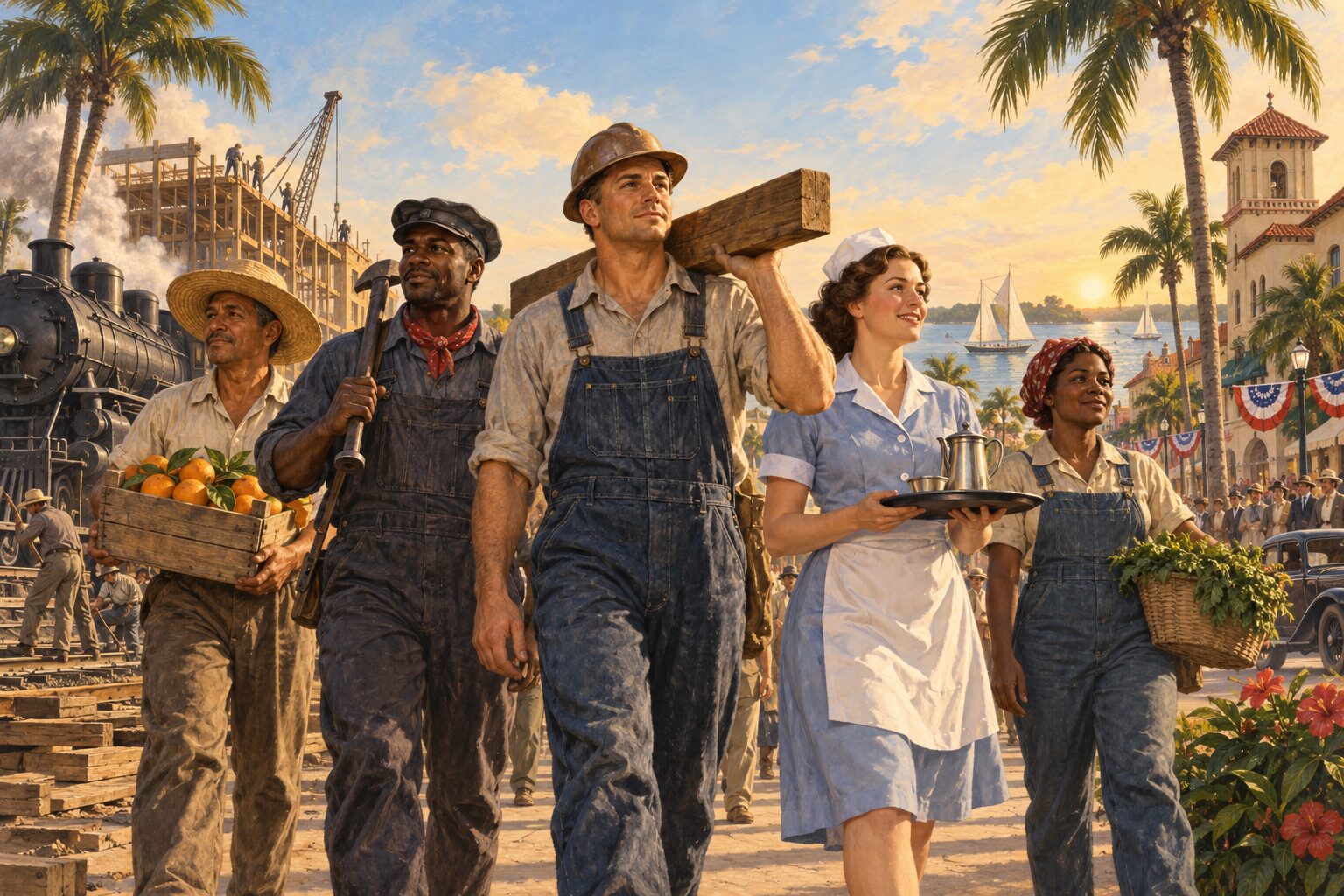
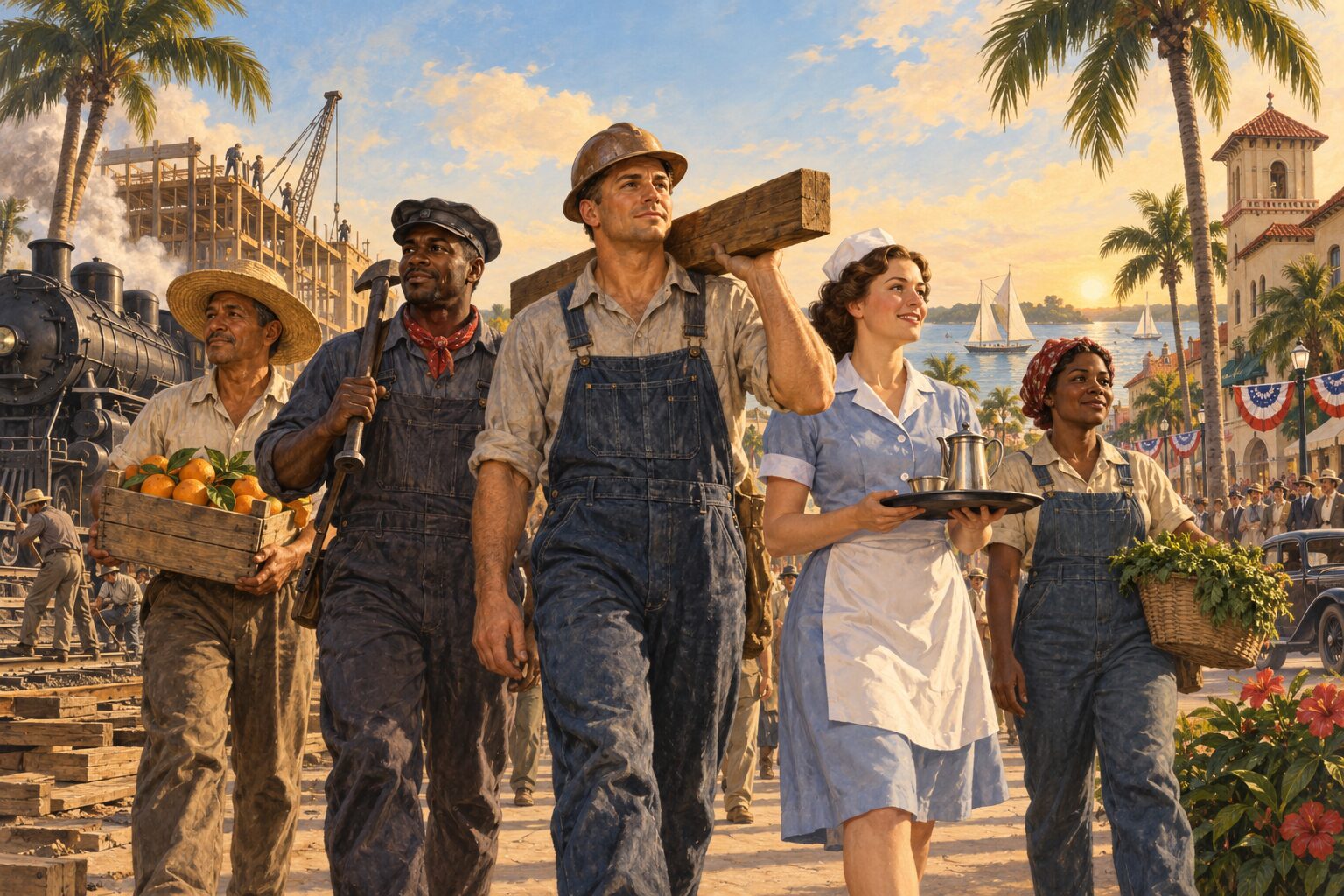
Labor Day is often recognized as the unofficial end of summer—a final long weekend filled with cookouts, family gatherings, and trips to the beach. However, the holiday has a much deeper meaning.
Observed on the first Monday in September, Labor Day honors the millions of American workers whose skill, determination, and sacrifice helped build the nation. In Florida, the holiday also recognizes generations of workers who constructed railroads, harvested crops, built communities, welcomed visitors, and helped transform the Sunshine State into the place we know today.
The idea for Labor Day emerged during the American labor movement of the late 1800s.
At that time, many Americans worked 12-hour days, six or seven days a week. Factories, mines, railroads, and other workplaces were frequently dangerous. Child labor was also common, and workers had few legal protections.
Labor organizations began calling for shorter workdays, safer working conditions, and fairer wages. They also wanted a special day recognizing the contributions American workers made to the country’s strength and prosperity.
The first widely recognized Labor Day celebration took place in New York City on September 5, 1882.
Thousands of workers participated in a parade organized by the Central Labor Union. Workers marched through the streets before gathering for speeches, music, food, and other festivities.
The celebration helped establish a tradition that quickly spread to other cities and states.
Historians continue to debate who first proposed the holiday. Some accounts credit Peter J. McGuire of the Brotherhood of Carpenters and Joiners, while others recognize machinist Matthew Maguire. Regardless of who first suggested it, the movement reflected a growing national desire to recognize working Americans.
Oregon became the first state to officially recognize Labor Day in 1887. Other states soon followed.
In 1894, Congress passed legislation making Labor Day a federal holiday. President Grover Cleveland signed the legislation into law on June 28, 1894.
From that point forward, Labor Day would be celebrated nationally on the first Monday in September.
Florida’s growth has always depended on hardworking people.
During the 1800s and early 1900s, workers built railroads that connected Florida’s towns and opened new areas to settlement and commerce. Railroad construction played a major role in the development of communities along both of Florida’s coasts.
Other important early Florida industries included:
These industries were physically demanding, and working conditions could be extremely difficult. Florida’s heat, humidity, insects, and unpredictable weather made many occupations even more challenging.
One of Florida’s most important labor stories developed in Ybor City, near Tampa.
Beginning in the late 1800s, thousands of Cuban, Spanish, Italian, and other immigrant workers came to the area to work in cigar factories. Ybor City eventually became one of the world’s leading cigar-manufacturing centers.
Cigar workers established mutual-aid societies that provided healthcare, education, cultural programs, and financial assistance to members. They also organized to seek better wages and improved working conditions.
Their influence extended well beyond the factory. The workers helped create a distinctive Florida community with traditions, architecture, cuisine, and culture that remain visible today.
As Florida developed during the 20th century, tourism became one of the state’s most important industries.
Hotels, restaurants, attractions, airports, golf courses, parks, and entertainment venues created employment opportunities throughout the state. Construction workers built homes, roads, bridges, resorts, and commercial centers to serve Florida’s growing population and millions of annual visitors.
In communities such as Naples, tourism and real estate have been particularly important. The area’s remarkable growth would not have been possible without builders, tradespeople, hospitality employees, public-safety personnel, healthcare professionals, educators, landscapers, service workers, and many others.
Their work is part of the foundation of modern Southwest Florida.
Agriculture has also played an essential role in Florida’s history.
Florida workers have produced oranges, grapefruit, tomatoes, strawberries, sugarcane, vegetables, cattle, and numerous other products. Generations of farmworkers have performed demanding jobs that help supply food to families throughout Florida and the rest of the country.
Labor Day provides an opportunity to remember the people behind the products we sometimes take for granted.
The American workplace has changed considerably since the first Labor Day parade in 1882. Many reforms supported by early labor advocates—including limits on child labor, improved workplace safety, and the eight-hour workday—eventually became accepted parts of American life.
Today, Labor Day recognizes workers in every part of the economy, including:
The holiday reminds us that communities are not created by buildings alone. They are created by the people who design, build, maintain, protect, and care for them.
For many Southwest Florida residents, Labor Day is a chance to enjoy the final days of summer with friends and family.
Popular activities include visiting the beach, boating, attending community events, supporting local restaurants, and exploring nearby parks. It is also an excellent time to recognize the people who keep our community running throughout the year.
A sincere thank-you to a restaurant employee, healthcare worker, first responder, teacher, contractor, delivery driver, or another local professional can be a meaningful way to honor the spirit of the holiday.
Labor Day is more than a three-day weekend. It is a tribute to the generations of Americans whose work helped build our country.
From the factory workers who participated in the first Labor Day parade to the railroad, agricultural, construction, tourism, and service workers who helped Florida grow, their contributions continue to shape our daily lives.
As we celebrate Labor Day, we can enjoy the traditions of the holiday while remembering its original purpose: honoring the dignity of work and the people who do it.
Labor Day is celebrated on the first Monday in September each year.
Labor Day was created to recognize the economic and social contributions of American workers and the labor movement.
The first widely recognized Labor Day parade was held in New York City on September 5, 1882.
Labor Day became a federal holiday in 1894 when President Grover Cleveland signed it into law.
Yes. Labor Day is observed throughout Florida on the first Monday in September. Government offices, banks, schools, and many businesses may be closed or operate on modified schedules.
Workers helped build Florida’s railroads, roads, homes, resorts, farms, ports, businesses, and communities. Important industries have included agriculture, construction, tourism, transportation, mining, fishing, cigar manufacturing, and hospitality.

Your Luxury REALTOR®, Trusted Advisor — Quintessential Naples Team at Downing-Frye Realty®Michael "Mike" Downer is the REALTOR® you want in your corner when buying or selling real es....
3 Bedrooms | 2 Bathrooms | More Than 2,000 Sq. Ft. | Fenced Backyard | Optional Boating AccessPresented by Michael Downer, Broker Associate | Downing-Frye Realty | Quintessential NaplesMore Space,
Newly Renovated | Impact Windows | New Appliances | Room for a Pool | No HOA | Golden Gate CityPresented by Michael Downer, Broker Associate | Downing-Frye Realty | Quintessential NaplesLess Fixing.
4 Bedrooms | 2 Bathrooms | Lakefront Pool Home | Reflection Lakes Presented by Mike Downer, Broker Associate | Downing-Frye Realty | Quintessential NaplesA Little More Time to Enjoy FloridaSome
2 Bedrooms | 2 Bathrooms | First-Floor Residence | Bonita SpringsPresented by Mike Downer, Broker Associate | Downing-Frye Realty | Quintessential NaplesA Simple Way to Enjoy Southwest
 All information regarding a property for sale, rental or financing, school information and public tax records is from sources deemed reliable; PROVIDED, HOWEVER, that representations and warranties are not made about the accuracy thereof, and such information is subject to errors, omissions, updates, modifications, changes of price, rent rates, commissions, prior sales, leases or financing, changes in school boundaries, or withdrawal without notice. All information displayed on this Website should
be independently verified if any person intends to engage in a transaction based upon such information.
Show More...
All information regarding a property for sale, rental or financing, school information and public tax records is from sources deemed reliable; PROVIDED, HOWEVER, that representations and warranties are not made about the accuracy thereof, and such information is subject to errors, omissions, updates, modifications, changes of price, rent rates, commissions, prior sales, leases or financing, changes in school boundaries, or withdrawal without notice. All information displayed on this Website should
be independently verified if any person intends to engage in a transaction based upon such information.
Show More...
 © 2026 Florida Gulf Coast MLS (FGCMLS) Information deemed reliable, but not guaranteed. The IDX data relating to real estate for sale on this web site comes in part from the Florida Gulf Coast Multiple Listing Service. The information being provided is for consumers' personal, non-commercial use and may not be used for any purpose other than to identify prospective properties consumers may be interested in purchasing. Information is deemed reliable but not guaranteed.
 This data is up-to-date as of September 25, 2026 6:55 PM UTC Some properties that appear for sale on this website may subsequently have sold and may no longer be available. For the most current information, contact Downing-Frye Realty.
The information provided is for consumers' personal, non-commercial use and may not be used for any other purpose. The data relating to real estate for sale on this website comes in part from the Broker Reciprocity Program (BR Program) of M.L.S. of Naples, Inc.,
Florida Gulf Coast MLS, Marco Multi-List, Inc., My Florida Regional MLS, or Miami Association of Realtors. Properties listed with brokerage firms other than Downing-Frye Realty are marked with the BR Program Icon or the BR House Icon and detailed information about them includes the name of the listing brokers. The properties displayed may not be all the properties available through the BR Program. The data provided by the Broker Reciprocity Program, and the Information is Deemed Reliable But Not Guaranteed. The source of the information about real property available for sale or rent is the copyrighted and proprietary database of the M.L.S. of Naples, Inc., Florida Gulf Coast MLS, Marco Multi-List, Inc., My Florida Regional MLS, or Miami Association of Realtors. Copyright 2026 M.L.S. of Naples, Inc., Florida Gulf Coast MLS, Marco Multi-List, Inc., My Florida Regional MLS, Miami Association of Realtors.; all rights reserved.
Show More...
This data is up-to-date as of September 25, 2026 6:55 PM UTC Some properties that appear for sale on this website may subsequently have sold and may no longer be available. For the most current information, contact Downing-Frye Realty.
The information provided is for consumers' personal, non-commercial use and may not be used for any other purpose. The data relating to real estate for sale on this website comes in part from the Broker Reciprocity Program (BR Program) of M.L.S. of Naples, Inc.,
Florida Gulf Coast MLS, Marco Multi-List, Inc., My Florida Regional MLS, or Miami Association of Realtors. Properties listed with brokerage firms other than Downing-Frye Realty are marked with the BR Program Icon or the BR House Icon and detailed information about them includes the name of the listing brokers. The properties displayed may not be all the properties available through the BR Program. The data provided by the Broker Reciprocity Program, and the Information is Deemed Reliable But Not Guaranteed. The source of the information about real property available for sale or rent is the copyrighted and proprietary database of the M.L.S. of Naples, Inc., Florida Gulf Coast MLS, Marco Multi-List, Inc., My Florida Regional MLS, or Miami Association of Realtors. Copyright 2026 M.L.S. of Naples, Inc., Florida Gulf Coast MLS, Marco Multi-List, Inc., My Florida Regional MLS, Miami Association of Realtors.; all rights reserved.
Show More...
