3 Bedrooms | 2 Bathrooms | More Than 2,000 Sq. Ft. | Fenced Backyard | Optional Boating AccessPresented by Michael Downer, Broker Associate | Downing-Frye Realty | Quintessential NaplesMore Space,

Dated: May 8 2026
Views: 173
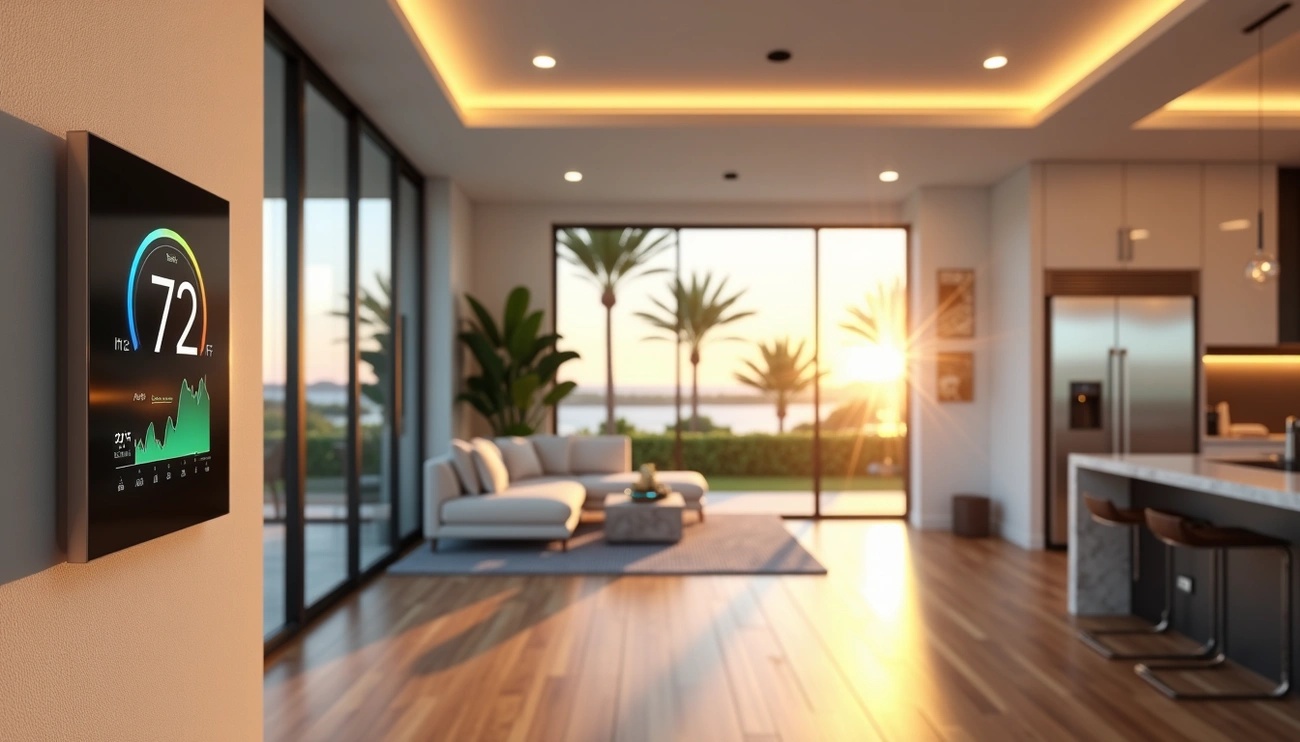
Key Takeaways
Smart home technology has evolved from luxury to necessity for Naples homeowners, offering significant financial returns and operational benefits in 2026.
• Smart home upgrades increase Naples property values by 3-5% while reducing annual utility costs by up to 30% • AI-powered climate control and security systems deliver the highest ROI, with smart thermostats alone saving $100-200 yearly • Federal tax credits offer 30% back on qualified smart home improvements, with annual maximums reaching $3,200 • Matter protocol enables seamless device integration across platforms, while professional installation prevents security vulnerabilities • Hurricane-resistant smart technology like motorized shutters and water leak detection systems protect coastal properties year-round
The combination of property value increases, energy savings, and tax incentives makes smart home investment particularly attractive for Naples homeowners, with some upgrades paying for themselves within 1-5 years while future-proofing properties for continued technological advancement.
House future technology has become essential for Naples homeowners, especially as our city continues to lead the nation in millionaires per capita. Smart home integration is no longer optional but a lifestyle expectation that affects property values and operational costs. Energy-efficient smart homes can lower utility bills by 20%–30% each year while increasing resale value by up to 5%–10%. These upgrades are strategic financially. Understanding what smart home technology is and its future is significant as we guide you through 2026's advanced home technology landscape. This piece will explore the future of smart homes and cover AI-powered systems and energy management solutions. We'll also discuss investment returns and how to prepare your Naples property for home technology future integration.
What is Smart House Technology and Why It Matters for Naples Homes
Understanding Smart Home Technology Basics
Smart homes are residences equipped with Internet of Things (IoT) devices that connect to the internet and can be controlled remotely via mobile apps or voice assistants such as Alexa and Google Assistant. Any residential property using WiFi-connected devices counts as a smart home, from simple smart light bulbs to sophisticated whole-home automation systems. These devices communicate via various connectivity methods, with WiFi being the most common, along with Bluetooth, Z-Wave, and ZigBee.
The real value emerges when individual devices integrate into automated routines. Automation layers let your home anticipate needs based on preset rules and learned behaviors, rather than managing separate apps throughout the day. A properly configured system creates programmable environments where lighting, climate control, security, and entertainment work together naturally.
How Smart Homes Have Evolved by 2026
The smart home market has expanded significantly, projected to reach USD 139.00 billion globally by 2032, with nearly half of US households adopting smart home devices by 2026. What previously felt fragmented has changed dramatically owing to the Matter protocol, an open standard supported by Amazon, Apple, Google, and Samsung that allows devices from different manufacturers to communicate directly. Matter 1.5 now has native support for security cameras and detailed energy features for solar and battery systems.
AI integration represents the biggest change in smart home technology. By 2026, AI-driven systems will predict resident priorities rather than follow commands. These intelligent homes adjust lighting based on mood, optimize HVAC using live weather data, and coordinate security systems with object recognition to reduce false alarms. The technology has moved from simple automation to adaptive environments that learn individual patterns.
Why Naples is Leading the Smart Home Revolution
Naples stands out in the luxury smart home market, with 77% of homebuyers willing to pay more for properties featuring intelligent systems. Smart home integration adds 5% more value to Naples properties, while listings showcasing these technologies attract 20% more online views. Our city's competitive luxury market now considers advanced home technology a standard rather than an option.
Several Naples developments embed technology into their designs. The Isles of Collier Preserve offers solar-ready homes with integrated smart controls, while Naples Reserve offers Wi-Fi-enabled whole-home automation. Seven Shores by Toll Brothers has built-in smart security, lighting, and climate systems, and The Ritz-Carlton Residences feature concierge-linked home automation. These installations work especially well for seasonal residents who can monitor properties remotely, adjust temperatures before arrival, and maintain security during extended absences.
Advanced Home Technology Features Transforming Naples Properties in 2026
AI-Powered Climate Control Systems
AI integration has redefined climate management in Naples homes. Machine learning algorithms now analyze occupancy patterns, weather forecasts, and historical usage to optimize heating and cooling cycles. These adaptive HVAC systems reduce energy consumption by 25% to 35%, resulting in substantial annual savings for large Naples properties. Predictive maintenance capabilities monitor vibration patterns and electrical draws. They alert homeowners weeks before equipment failures occur. AI-powered digital twin HVAC systems simulate performance in real-time, and some installations cut energy use by up to 40% through optimized chiller and fan performance.
Next-Generation Home Security and Privacy
Security systems now incorporate AI-driven face recognition to identify trusted individuals and customize responses. SimpliSafe, ADT, and other providers offer facial detection to manage access through smart locks and video doorbells. Professional monitoring costs $30 to $45 per month. AI features command premium pricing. Ring introduced Fire Watch technology that analyzes video for visual signs of smoke or fire and delivers early warnings during fast-moving events. Privacy-conscious homeowners can opt for local processing systems that eliminate cloud dependency and reduce cyber attack vulnerabilities.
Smart Lighting and Energy Management
Automated LED systems deliver 60-80% reductions in lighting electricity consumption. Occupancy sensors prevent lights from running in empty rooms. Daylight-based dimming adjusts output based on available natural light. Location-based controls use smartphone geo-fencing to turn off lights when residents leave. These systems match light output to actual need rather than fixed schedules.
Voice and Gesture-Controlled Home Automation
Emerson's SmartVoice technology operates without WiFi or hubs and uses on-device voice control that responds to wake words and preset commands. The lineup includes air fryers with over 1,000 voice commands and fans that understand 40+ commands. FIBARO SWIPE detects complex gesture combinations on surfaces such as countertops and desks. This allows touchless control of lighting and electronics.
Integrated Water Conservation Technology
Smart irrigation controllers save 30-50% on monthly watering bills by using local weather data to determine optimal watering schedules. Water leak detection devices identify household leaks that waste over 10,000 gallons each year and shut off the supply to minimize damage.
The Future of Smart Home Technology: Investment Value and Energy Savings
Property Value Increases with Smart Technology
Smart technology additions increase Naples property values by 3% to 5%. This translates to $15,000 to $25,000 on a $500,000 home. Research shows that 78% of homebuyers are willing to pay more for properties with smart devices, and 28% of Americans are willing to spend an average of $18,056 more for smart home features. Smart security systems deliver the strongest returns and add up to 5% in value. Smart thermostats contribute 3% to 5% increases. Then 79% of homebuyers seek smart-enabled properties, and homes with these features sell 40% faster in competitive markets.
Annual Cost Savings for Naples Homeowners
Energy-efficient smart homes reduce utility costs by $427 to $640 each year. This represents 27% savings on the average $2,300 yearly energy bill. Smart thermostats save 10% to 15% on heating and cooling and average $100 to $200 per year. Smart lighting cuts electricity usage by 40% and saves approximately $75 each year. Smart plugs reduce consumption by 5% to 10% and add $100 in yearly savings. More fully optimized smart homes achieve 10% to 30% reductions in total utility costs.
Federal and State Tax Incentives in 2026
The IRS Section 25C Energy Efficient Home Improvement Credit offers a 30% tax credit for qualified upgrades. The annual maximum is $3,200, split between $2,000 for heat pumps and heat pump water heaters, and $1,200 for general energy property, including smart thermostats [202]. Electrical panel upgrades with a 200-amp capacity qualify for $600 credits [202]. These non-refundable credits reduce tax liability but cannot exceed the taxes owed [202].
Long-Term ROI on Smart Home Upgrades
Smart thermostats deliver 80% to 90% ROI and pay for themselves in 1 to 5 years. Video doorbells return 85% to 95%, while smart lighting systems achieve 60% to 75% ROI. Smart plugs typically break down within 8 months to 1 year. A $5,000 smart home investment that adds 3% value to a $400,000 property generates $12,000 in appreciation and produces a $7,000 net profit.
How Naples Homeowners Can Prepare for Future Technology Integration
Working with Smart Home Certified Builders
Professional installation protects against security vulnerabilities. Hackers attempt 14 cyber-attacks per hour on smart home devices. CEDIA-certified installers demonstrate technical expertise and follow industry ethics standards. Verified professionals handle installations for 66% of homeowners. Smart home pre-wiring during construction eliminates costly updates later. It creates future-ready infrastructure for networking, security, and automation without opening finished walls.
Choosing the Right Technology Platform
Matter-certified devices work with Amazon Alexa, Google Home, and Apple HomeKit. Alexa offers the widest device compatibility. Google Assistant delivers superior voice recognition accuracy. Apple HomeKit and Home Assistant provide excellent local control for privacy-focused homeowners. Matter runs over home networks rather than cloud servers. This ensures faster response times.
Planning for Flexible Smart Home Systems
Structured wiring with CAT6A cabling supports future connectivity standards, such as WiFi 6E. Modular hardware enables incremental expansion without system overhauls. Review your system every two to three years. Check compatibility with emerging technologies. Power over Ethernet simplifies device installation by eliminating the need for additional cables.
Hurricane-Proof Smart Technology for Coastal Living
Motorized hurricane shutters controlled through smartphone apps cost over $1,000 per window. Kevlar-style screens provide wind protection while maintaining visibility and fire escape access at $35 to $50 per square foot. Marine-rated wiring and sealed enclosures resist salt air corrosion in coastal environments. Water leak detection systems automatically shut off the supply to prevent damage.
Conclusion
Smart home technology has become a necessity rather than a luxury for Naples homeowners in 2026. Strategic implementation of these systems will increase property values by 3% to 5% and reduce annual utility costs by up to 30%. Start with high-ROI upgrades, such as smart thermostats and security systems. You can expand your system over time. Work with certified installers to keep your home secure and future-ready. Our coastal environment presents unique challenges that require careful planning.
Buying or selling in Naples? Local knowledge is the real advantage.
With an in-depth understanding of Naples neighborhoods, amenities, and market cycles, the Quintessential Naples Team at Downing-Frye Realty identifies opportunities others overlook while safeguarding long-term value.
#QuintessentialNaples
#Downing-FryeRealty
#NaplesRealEstate
#NaplesLuxury
#NaplesLuxuryRealEstate
#LuxuryHomesInNaples
#TrustedRealEstateAdvisor
#GenerationalWealth
#LuxuryLifestyle
#SouthwestFloridaRealEstate
FAQs
Q1. What are the major smart home trends for 2026? The key trend in 2026 is the evolution from basic automation to intelligent energy management systems. Modern smart homes now feature AI-powered systems that provide detailed consumption insights, automatically optimize scheduling, and maximize energy efficiency rather than simply turning devices on and off.
Q2. How much can smart home technology increase property values? Smart home technology typically increases property values by 3% to 5%, which translates to approximately $15,000 to $25,000 on a $500,000 home. Research shows that 78% of homebuyers are willing to pay more for properties equipped with smart devices, and these homes sell 40% faster in competitive markets.
Q3. What kind of energy savings can homeowners expect from smart home systems? Energy-efficient smart homes can reduce utility costs by 20% to 30% annually, saving between $427 and $640. Smart thermostats alone save 10% to 15% on heating and cooling costs, while smart lighting can cut electricity usage by 40%, resulting in approximately $75 in annual savings.
Q4. Are there tax incentives available for smart home upgrades in 2026? Yes, the IRS Section 25C Energy Efficient Home Improvement Credit offers a 30% tax credit on qualified upgrades, with an annual maximum of $3,200. This includes up to $2,000 for heat pumps and heat pump water heaters, $1,200 for energy property, including smart thermostats, and $600 for electrical panel upgrades.
Q5. Why is professional installation important for smart home systems? Professional installation is crucial for security, as smart home devices face an average of 14 cyber-attacks per hour. CEDIA-certified installers ensure proper setup, follow industry standards, and can implement pre-wiring during construction to avoid costly retrofits later. In fact, 66% of homeowners prefer working with verified professionals for their smart home installations.

Your Luxury REALTOR®, Trusted Advisor — Quintessential Naples Team at Downing-Frye Realty®Michael "Mike" Downer is the REALTOR® you want in your corner when buying or selling real es....
3 Bedrooms | 2 Bathrooms | More Than 2,000 Sq. Ft. | Fenced Backyard | Optional Boating AccessPresented by Michael Downer, Broker Associate | Downing-Frye Realty | Quintessential NaplesMore Space,
Newly Renovated | Impact Windows | New Appliances | Room for a Pool | No HOA | Golden Gate CityPresented by Michael Downer, Broker Associate | Downing-Frye Realty | Quintessential NaplesLess Fixing.
4 Bedrooms | 2 Bathrooms | Lakefront Pool Home | Reflection Lakes Presented by Mike Downer, Broker Associate | Downing-Frye Realty | Quintessential NaplesA Little More Time to Enjoy FloridaSome
2 Bedrooms | 2 Bathrooms | First-Floor Residence | Bonita SpringsPresented by Mike Downer, Broker Associate | Downing-Frye Realty | Quintessential NaplesA Simple Way to Enjoy Southwest
 All information regarding a property for sale, rental or financing, school information and public tax records is from sources deemed reliable; PROVIDED, HOWEVER, that representations and warranties are not made about the accuracy thereof, and such information is subject to errors, omissions, updates, modifications, changes of price, rent rates, commissions, prior sales, leases or financing, changes in school boundaries, or withdrawal without notice. All information displayed on this Website should
be independently verified if any person intends to engage in a transaction based upon such information.
Show More...
All information regarding a property for sale, rental or financing, school information and public tax records is from sources deemed reliable; PROVIDED, HOWEVER, that representations and warranties are not made about the accuracy thereof, and such information is subject to errors, omissions, updates, modifications, changes of price, rent rates, commissions, prior sales, leases or financing, changes in school boundaries, or withdrawal without notice. All information displayed on this Website should
be independently verified if any person intends to engage in a transaction based upon such information.
Show More...
 © 2026 Florida Gulf Coast MLS (FGCMLS) Information deemed reliable, but not guaranteed. The IDX data relating to real estate for sale on this web site comes in part from the Florida Gulf Coast Multiple Listing Service. The information being provided is for consumers' personal, non-commercial use and may not be used for any purpose other than to identify prospective properties consumers may be interested in purchasing. Information is deemed reliable but not guaranteed.
 This data is up-to-date as of September 25, 2026 6:55 PM UTC Some properties that appear for sale on this website may subsequently have sold and may no longer be available. For the most current information, contact Downing-Frye Realty.
The information provided is for consumers' personal, non-commercial use and may not be used for any other purpose. The data relating to real estate for sale on this website comes in part from the Broker Reciprocity Program (BR Program) of M.L.S. of Naples, Inc.,
Florida Gulf Coast MLS, Marco Multi-List, Inc., My Florida Regional MLS, or Miami Association of Realtors. Properties listed with brokerage firms other than Downing-Frye Realty are marked with the BR Program Icon or the BR House Icon and detailed information about them includes the name of the listing brokers. The properties displayed may not be all the properties available through the BR Program. The data provided by the Broker Reciprocity Program, and the Information is Deemed Reliable But Not Guaranteed. The source of the information about real property available for sale or rent is the copyrighted and proprietary database of the M.L.S. of Naples, Inc., Florida Gulf Coast MLS, Marco Multi-List, Inc., My Florida Regional MLS, or Miami Association of Realtors. Copyright 2026 M.L.S. of Naples, Inc., Florida Gulf Coast MLS, Marco Multi-List, Inc., My Florida Regional MLS, Miami Association of Realtors.; all rights reserved.
Show More...
This data is up-to-date as of September 25, 2026 6:55 PM UTC Some properties that appear for sale on this website may subsequently have sold and may no longer be available. For the most current information, contact Downing-Frye Realty.
The information provided is for consumers' personal, non-commercial use and may not be used for any other purpose. The data relating to real estate for sale on this website comes in part from the Broker Reciprocity Program (BR Program) of M.L.S. of Naples, Inc.,
Florida Gulf Coast MLS, Marco Multi-List, Inc., My Florida Regional MLS, or Miami Association of Realtors. Properties listed with brokerage firms other than Downing-Frye Realty are marked with the BR Program Icon or the BR House Icon and detailed information about them includes the name of the listing brokers. The properties displayed may not be all the properties available through the BR Program. The data provided by the Broker Reciprocity Program, and the Information is Deemed Reliable But Not Guaranteed. The source of the information about real property available for sale or rent is the copyrighted and proprietary database of the M.L.S. of Naples, Inc., Florida Gulf Coast MLS, Marco Multi-List, Inc., My Florida Regional MLS, or Miami Association of Realtors. Copyright 2026 M.L.S. of Naples, Inc., Florida Gulf Coast MLS, Marco Multi-List, Inc., My Florida Regional MLS, Miami Association of Realtors.; all rights reserved.
Show More...
