3 Bedrooms | 2 Bathrooms | More Than 2,000 Sq. Ft. | Fenced Backyard | Optional Boating AccessPresented by Michael Downer, Broker Associate | Downing-Frye Realty | Quintessential NaplesMore Space,

Dated: February 18 2026
Views: 136
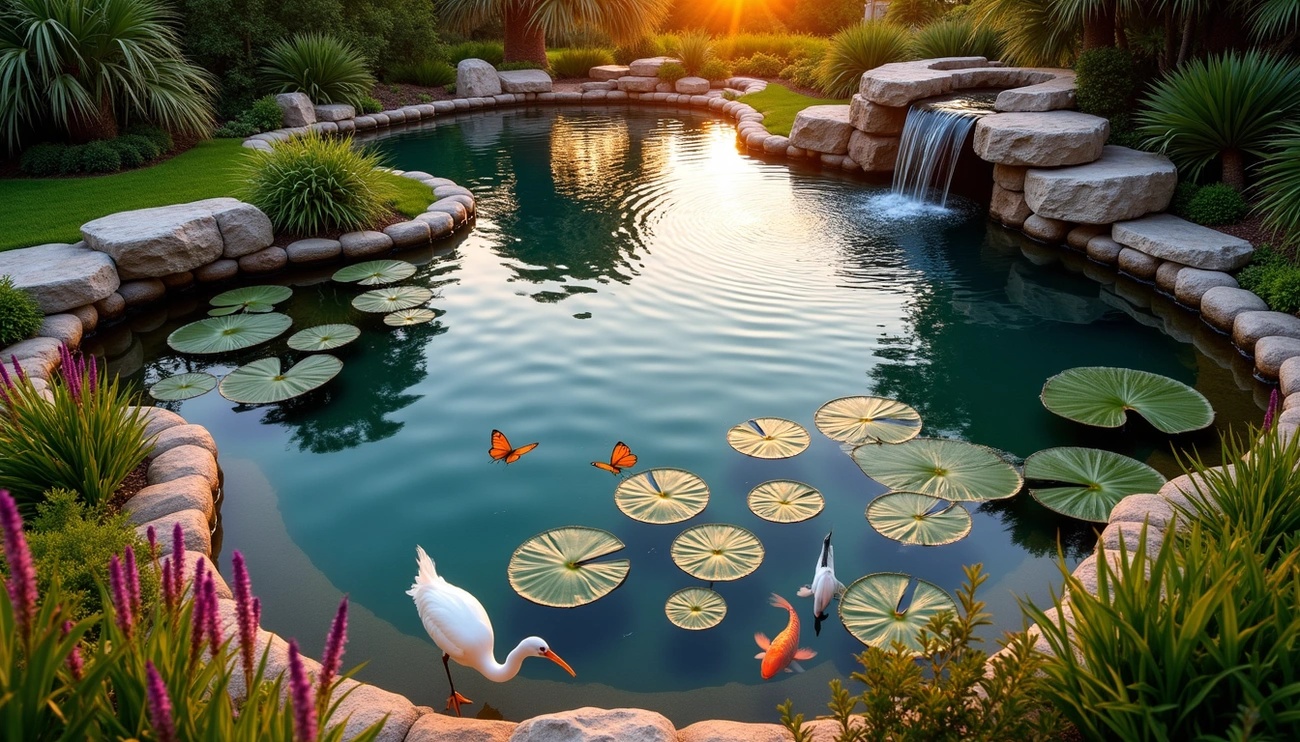
Luxury pond landscaping reshapes the scene of Naples properties. These properties become vibrant wildlife sanctuaries and enhance the beauty of our coastal landscape. Our team has watched how well-designed water features attract and support local ecosystems in Southwest Florida.
The perfect pond landscape needs more than just good looks. Modern pond landscaping uses shallow edges so wildlife can access them easily. Creative pond designs add muddy areas that butterflies and birds love. Waterfalls and pond landscapes work best with native plants that adapt perfectly to our region's soil and rainfall patterns. Garden ponds and large pond projects help maintain ecological balance by keeping them free of invasive species that could overtake native flora and fauna.
This detailed 2026 guide shows how luxury pond features support biodiversity and attract pollinators. These features also help maintain the ecological health of our coastal environment. This piece will help you create a pond that looks stunning and adds ecological value, whether you're starting fresh or upgrading your current water feature.
Naturalistic Ponds: A Haven for Native Wildlife
Natural pond designs draw their inspiration straight from wild aquatic systems. These designs go beyond simple decoration. My experience with countless Naples installations shows how these carefully planned water features become living ecosystems that support local wildlife.
Use of native aquatic plants and stones
Natural stone creates the foundation of wildlife-friendly pond landscaping. It brings an authentic feel that synthetic materials can't match. Real stone stands up better to Florida's harsh UV rays and temperature swings than manufactured options. Your pond stays beautiful year after year. Granite and sandstone work best as native stones, while limestone may change your water's pH.
These native aquatic plants will help support wildlife:
Native plants and local wildlife have grown together over time. They work much better in garden pond projects than exotic species. These plants are naturally tough enough to handle local conditions. You'll need fewer chemicals and less maintenance.
Creating shallow zones for amphibians
Good pond landscaping needs gentle slopes and different depths. Most pond creatures do best in very shallow spots, usually just 1-10 cm deep, right next to the pond bank. The slopes should be gentle—staying under 1:5 (12°) and ideally under 1:20 (3°).
Amphibians need wide, shallow edges at the pond's rim (less than 10cm deep for at least 1 meter). These areas warm up quickly. They make perfect spawning spots and help tadpoles grow faster. You should also add some deeper parts (about 0.5m). This ensures that water remains available during dry spells.
How irregular shapes mimic natural habitats
The secret to authentic waterfalls and pond landscaping lies in avoiding straight lines and perfect shapes. Free-flowing curves work better. They create different mini-habitats along various depths and edges. These natural contours look better and set up distinct zones where different species can thrive.
Larger pond projects benefit from multiple levels with smooth transitions between areas. This approach makes the pond more interesting with shadows and light playing on the water. It also creates beautiful opportunities for water to cascade between different sections.
Koi and Fish-Friendly Ponds That Support Biodiversity
Building fish-friendly habitats needs more than just decorative water features. Beautiful koi ponds that support biodiversity combine luxury with nature's principles. This creates balanced environments where fish thrive among native wildlife.
Designing deeper ponds with filtration
Depth plays a vital role in keeping fish populations healthy. Your koi pond needs to be at least 2-4 feet deep. This helps regulate water temperature and keeps fish safe from predators. Naples ponds work best with sections 4-5 feet deep during the cooler winter months. These depths prevent freezing and create temperature zones that koi love.
Healthy ponds need reliable filtration systems. Three main components work together:
Water quality improves naturally when gentle slopes point toward drainage. This directs waste to filters with minimal maintenance.
Balancing esthetics with fish health
Pond design directly impacts fish well-being. Gentle curves work better than sharp corners because they create smoother water flow and eliminate dead zones. Rock placement and varied plant heights provide fish with hiding places in garden ponds.
Fish need space to thrive - one five-inch fish needs five square feet of surface area. Koi produce a lot of waste, so proper sizing prevents overcrowding. A 10×10-foot pond can house about 20 five-inch fish with room to grow.
Using lily pads and overhangs for shade
Lily pads do more than look pretty. They provide needed shade, keep water temperature stable, and give fish safe spots to hide from predators. They also make oxygen through photosynthesis and help balance the pond's ecosystem.
Lily pads should cover no more than 50-60% of your pond's surface. Too many can lower oxygen levels and block water movement. Adding waterfalls and other features with lily pads helps maintain healthy oxygen levels day and night.
Wildlife Ponds: Turning Backyards into Sanctuaries
Wildlife ponds create miniature ecosystems that attract and nurture local fauna in your backyard. These ponds establish vital habitat networks in Naples' urban world and enhance your property's visual appeal.
Encouraging frogs, birds, and butterflies
A well-designed pond quickly attracts a variety of wildlife. Dragonflies, frogs, and birds usually appear within the first year after installation. Your pond needs underwater caves with large rocks where tadpoles can hide from predators. Adding perches, such as logs or flat stones, creates ideal basking spots that attract a variety of species.
Incorporating muddy banks and shallow edges
The pond's edge plays a vital role in wildlife attraction. Gradually sloping sides with small vertical drops help smaller birds and amphibians access water safely. A few muddy areas near the pond give frogs and insects places to cool off and breed. This design mimics naturally occurring seasonal wetlands.
Avoiding chemicals that harm local species
Natural maintenance approaches keep wildlife healthy. Bees and other pollinators react strongly to chemicals. Beneficial bacteria are more effective than harsh algaecides at maintaining water clarity. To name just one example, enzyme-based cleaners provide a natural alternative that works with nature rather than against it.
How garden pond landscaping supports pollinators.
Ponds with native flowering plants create ideal pollinator habitats. Effective choices include:
Modern and Large Ponds Landscaping with Eco Features
Eco-friendly technologies are reshaping large pond landscaping in Naples beyond looks. These innovations strike a perfect balance between luxury and environmental care by creating green water features that save resources.
Using solar-powered waterfalls and lighting
Solar-powered pond features work without electricity, making them both affordable and eco-friendly. These systems use sunlight through user-focused designs that don't need complex wiring or external power. Solar fountains add 5-40 pounds of oxygen per day, helping prevent algae growth and create healthier aquatic environments. Solar aeration is particularly valuable in winter, as it prevents ice from forming, which can block sunlight and potentially kill fish.
Integrating rainwater harvesting systems
Rainwater harvesting turns pond landscaping into conservation champions. A 2,000-square-foot residential roof can collect about 1,250 gallons of reusable water from just one inch of rain. This method reduces runoff that typically carries oil and chemicals into natural water bodies. The collected rainwater works perfectly for ponds because it's naturally soft and chemical-free, preventing calcium buildup and keeping the water pH stable.
Designing with native grasses and low-litter plants
Native grasses improve pond edges through:
Examples of large pond landscaping in Naples
Stormwater retention ponds across Naples show how functional water features can become neighborhood highlights. These ponds collect runoff while providing habitat for aquatic plants and animals. Wetland grasses, such as lanceleaf arrowhead, in properly designed littoral zones act as natural water filters by absorbing high nutrient levels. The Naples Garden shows how careful shoreline planting helps local wildlife thrive, including frogs, insects, snails, birds, and turtles.
Conclusion
Luxury pond landscaping adds much more than beauty to Naples properties. This piece shows how well-designed water features boost property aesthetics and create vital habitats for local wildlife. These aquatic ecosystems act as neighborhood conservation areas that support everything from dragonflies and butterflies to frogs and native birds.
Natural elements create truly effective wildlife ponds. Native plants, varied depths, irregular shapes, and gentle slopes combine to create diverse microhabitats that support a wide range of species. As with proper filtration systems, balanced stocking and strategic plant placement help koi ponds stay healthy while contributing to local biodiversity.
Research proves that even small garden ponds can make a profound ecological difference when designed with wildlife in mind. Muddy banks, shallow edges, and chemical-free maintenance practices turn ordinary backyards into thriving sanctuaries. These sanctuaries connect fragmented habitats throughout our digital world.
Pond owners can now blend luxury with conservation through modern technologies. Solar power, rainwater harvesting, and native plantings reduce environmental impact and create stunning water features. These approaches demonstrate how esthetics and ecology complement rather than compete with each other.
Naples leads this eco-luxury movement. Our unique coastal environment benefits from each thoughtfully designed pond that supports native wildlife. Note that beauty and biodiversity go hand in hand, whether you plan to install a new feature or upgrade an existing pond. Your pond will boost your property's value and help preserve Naples' rich natural heritage.
Real estate should feel confident, not complicated.
Through clear communication and structured guidance, the Quintessential Naples Team at Coldwell Banker Realty simplifies complex transactions without sacrificing precision or professionalism.
#QuintessentialNaples
#ColdwellBankerRealty
#NaplesRealEstate
#NaplesLuxury
#NaplesLuxuryRealEstate
#LuxuryHomesInNaples
#TrustedRealEstateAdvisor
#GenerationalWealth
#LuxuryLifestyle
#SouthwestFloridaRealEstate
Key Takeaways
Discover how luxury pond landscaping in Naples creates stunning water features that double as wildlife sanctuaries, proving that beauty and biodiversity can thrive together.
• Design with nature in mind: Use native plants, irregular shapes, and shallow zones to create authentic habitats that attract frogs, birds, and butterflies naturally.
• Balance fish health with ecology: Maintain proper depth (2-4 feet), effective filtration, and 50-60% lily pad coverage for thriving koi while supporting biodiversity.
• Go chemical-free for wildlife safety: Replace harsh algaecides with beneficial bacteria and enzyme cleaners to protect sensitive pollinators and amphibians.
• Embrace eco-friendly technology: Solar-powered features and rainwater harvesting reduce environmental impact while creating sustainable luxury water features.
• Create gradual transitions: Gentle slopes (less than 1:5) and muddy banks provide safe wildlife access while preventing erosion and supporting diverse species.
When properly designed, luxury ponds become vital habitat networks in Naples' urban landscape, supporting local ecosystems while enhancing property value and visual appeal.
FAQs
Q1. What types of wildlife can be attracted to luxury ponds in Naples? Luxury ponds in Naples can attract a diverse range of wildlife, including frogs, birds, butterflies, dragonflies, and various aquatic insects. When designed properly, these ponds can become thriving ecosystems supporting local biodiversity.
Q2. How do naturalistic pond designs benefit native wildlife? Naturalistic pond designs incorporate native aquatic plants, varied depths, and irregular shapes that mimic natural habitats. These features create diverse microhabitats that provide shelter, breeding grounds, and food sources for local wildlife.
Q3. Can koi ponds support biodiversity while maintaining fish health? Yes, koi ponds can support biodiversity when properly designed. By incorporating deeper sections, effective filtration systems, and balanced plant cover, such as lily pads, these ponds can create a healthy environment for koi while also attracting and supporting other wildlife.
Q4. What eco-friendly features can be integrated into modern pond landscaping? Modern pond landscaping can incorporate eco-friendly features such as solar-powered waterfalls and lighting, rainwater harvesting systems, and native grasses. These elements help conserve resources, reduce environmental impact, and create sustainable water features.
Q5. How do wildlife ponds contribute to local conservation efforts? Wildlife ponds act as miniature ecosystems, creating vital habitat networks in urban landscapes. They provide safe spaces for various species to breed, feed, and shelter, effectively serving as neighborhood conservation areas that support and connect fragmented habitats across the region.

Your Luxury REALTOR®, Trusted Advisor — Quintessential Naples Team at Downing-Frye Realty®Michael "Mike" Downer is the REALTOR® you want in your corner when buying or selling real es....
3 Bedrooms | 2 Bathrooms | More Than 2,000 Sq. Ft. | Fenced Backyard | Optional Boating AccessPresented by Michael Downer, Broker Associate | Downing-Frye Realty | Quintessential NaplesMore Space,
Newly Renovated | Impact Windows | New Appliances | Room for a Pool | No HOA | Golden Gate CityPresented by Michael Downer, Broker Associate | Downing-Frye Realty | Quintessential NaplesLess Fixing.
4 Bedrooms | 2 Bathrooms | Lakefront Pool Home | Reflection Lakes Presented by Mike Downer, Broker Associate | Downing-Frye Realty | Quintessential NaplesA Little More Time to Enjoy FloridaSome
2 Bedrooms | 2 Bathrooms | First-Floor Residence | Bonita SpringsPresented by Mike Downer, Broker Associate | Downing-Frye Realty | Quintessential NaplesA Simple Way to Enjoy Southwest
 All information regarding a property for sale, rental or financing, school information and public tax records is from sources deemed reliable; PROVIDED, HOWEVER, that representations and warranties are not made about the accuracy thereof, and such information is subject to errors, omissions, updates, modifications, changes of price, rent rates, commissions, prior sales, leases or financing, changes in school boundaries, or withdrawal without notice. All information displayed on this Website should
be independently verified if any person intends to engage in a transaction based upon such information.
Show More...
All information regarding a property for sale, rental or financing, school information and public tax records is from sources deemed reliable; PROVIDED, HOWEVER, that representations and warranties are not made about the accuracy thereof, and such information is subject to errors, omissions, updates, modifications, changes of price, rent rates, commissions, prior sales, leases or financing, changes in school boundaries, or withdrawal without notice. All information displayed on this Website should
be independently verified if any person intends to engage in a transaction based upon such information.
Show More...
 © 2026 Florida Gulf Coast MLS (FGCMLS) Information deemed reliable, but not guaranteed. The IDX data relating to real estate for sale on this web site comes in part from the Florida Gulf Coast Multiple Listing Service. The information being provided is for consumers' personal, non-commercial use and may not be used for any purpose other than to identify prospective properties consumers may be interested in purchasing. Information is deemed reliable but not guaranteed.
 This data is up-to-date as of September 25, 2026 6:55 PM UTC Some properties that appear for sale on this website may subsequently have sold and may no longer be available. For the most current information, contact Downing-Frye Realty.
The information provided is for consumers' personal, non-commercial use and may not be used for any other purpose. The data relating to real estate for sale on this website comes in part from the Broker Reciprocity Program (BR Program) of M.L.S. of Naples, Inc.,
Florida Gulf Coast MLS, Marco Multi-List, Inc., My Florida Regional MLS, or Miami Association of Realtors. Properties listed with brokerage firms other than Downing-Frye Realty are marked with the BR Program Icon or the BR House Icon and detailed information about them includes the name of the listing brokers. The properties displayed may not be all the properties available through the BR Program. The data provided by the Broker Reciprocity Program, and the Information is Deemed Reliable But Not Guaranteed. The source of the information about real property available for sale or rent is the copyrighted and proprietary database of the M.L.S. of Naples, Inc., Florida Gulf Coast MLS, Marco Multi-List, Inc., My Florida Regional MLS, or Miami Association of Realtors. Copyright 2026 M.L.S. of Naples, Inc., Florida Gulf Coast MLS, Marco Multi-List, Inc., My Florida Regional MLS, Miami Association of Realtors.; all rights reserved.
Show More...
This data is up-to-date as of September 25, 2026 6:55 PM UTC Some properties that appear for sale on this website may subsequently have sold and may no longer be available. For the most current information, contact Downing-Frye Realty.
The information provided is for consumers' personal, non-commercial use and may not be used for any other purpose. The data relating to real estate for sale on this website comes in part from the Broker Reciprocity Program (BR Program) of M.L.S. of Naples, Inc.,
Florida Gulf Coast MLS, Marco Multi-List, Inc., My Florida Regional MLS, or Miami Association of Realtors. Properties listed with brokerage firms other than Downing-Frye Realty are marked with the BR Program Icon or the BR House Icon and detailed information about them includes the name of the listing brokers. The properties displayed may not be all the properties available through the BR Program. The data provided by the Broker Reciprocity Program, and the Information is Deemed Reliable But Not Guaranteed. The source of the information about real property available for sale or rent is the copyrighted and proprietary database of the M.L.S. of Naples, Inc., Florida Gulf Coast MLS, Marco Multi-List, Inc., My Florida Regional MLS, or Miami Association of Realtors. Copyright 2026 M.L.S. of Naples, Inc., Florida Gulf Coast MLS, Marco Multi-List, Inc., My Florida Regional MLS, Miami Association of Realtors.; all rights reserved.
Show More...
