3 Bedrooms | 2 Bathrooms | More Than 2,000 Sq. Ft. | Fenced Backyard | Optional Boating AccessPresented by Michael Downer, Broker Associate | Downing-Frye Realty | Quintessential NaplesMore Space,

Dated: December 2 2025
Views: 1250
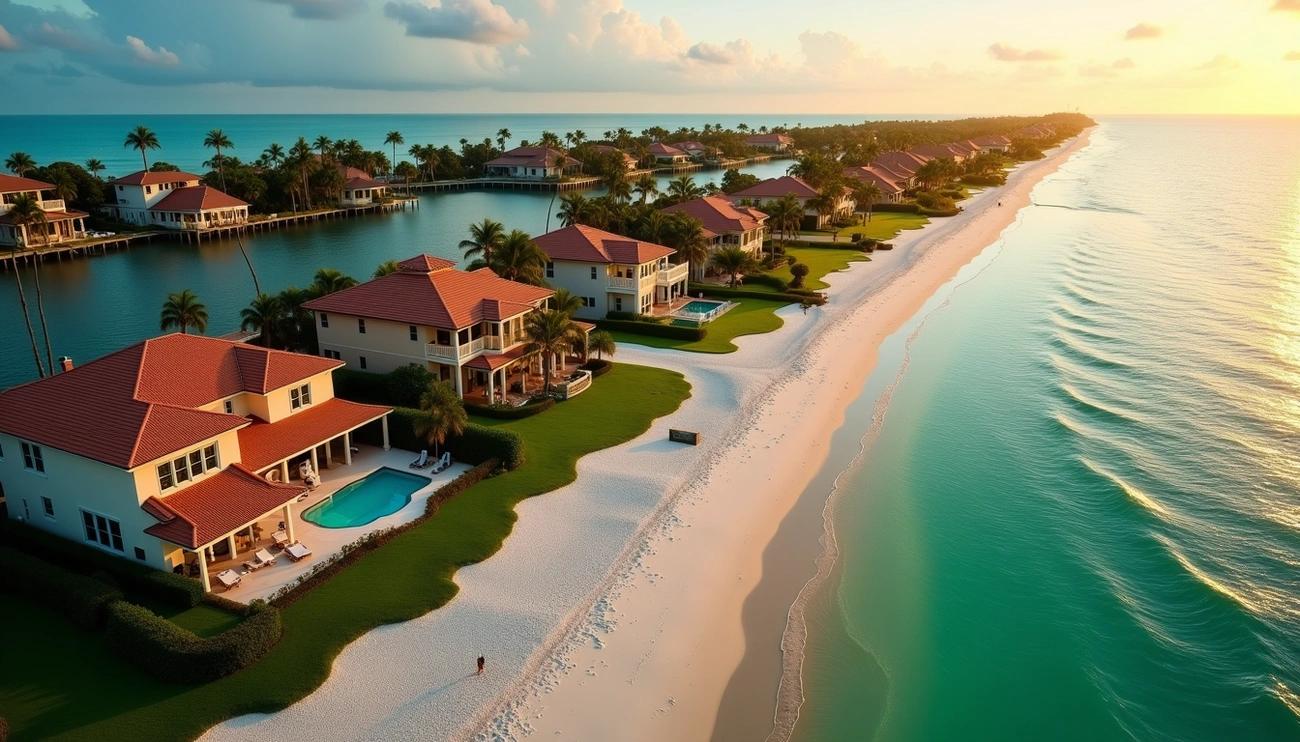
The Naples real estate market shows a remarkable contradiction in 2025. The market keeps getting stronger with median home prices hitting $640,032 in January—up 2.7% from last year. Yet 99% of Naples homes face serious flood risks over the next 30 years. This gap between climate dangers and market strength raises significant questions about whether property values will remain stable.
Let's get into what a real estate bubble really is—a market where prices balloon beyond their true value. The situation in Naples appears particularly concerning. Florida's real estate values are already $50 billion too high due to flood risks, but buyers continue to come. The market shows signs of change, though. About 85.1% of homes sold below asking price in January 2025, and available properties jumped by more than 30% compared to last year. Houses now take around 89 days to sell, much longer than the 45-60 days we saw before.
This piece explores why Naples' luxury market defies climate logic, how environmental threats influence buyer behavior, and what this means for coastal property values in one of America's most sought-after destinations.
Understanding the Naples Real Estate Bubble
Real estate bubbles are among the most significant economic events that impact housing markets worldwide. Let's understand what constitutes a true market bubble before examining Naples specifically.
What is a real estate bubble?
Property prices surge to levels that don't accurately reflect their true value during a real estate bubble. These bubbles typically follow land booms or periods when interest rates decline. They illustrate how asset prices can deviate from their intrinsic value, often because investors become overly influenced by market psychology rather than considering economic fundamentals.
Here's what makes real estate bubbles stand out:
Housing bubbles hit harder than stock market crashes. IMF data show that housing price crashes occur less frequently but last twice as long as stock market drops. They also hurt the economy twice as much. Additionally, real estate markets tend to take longer to fluctuate, as people can't buy and sell houses as quickly as stocks.
Is there a real estate bubble in Naples?
The Naples market sends mixed messages right now. Median home prices dropped 11.3% from $700,000 in May 2024 to $621,250 in May 2025. Yet prices remain nowhere near pre-pandemic levels. Single-family homes took a bigger hit with a 17.3% yearly drop to $730,000 from $882,550.
The market shows signs of cooling rather than crashing:
All the same, Naples holds up better than other Florida markets. Local reports show that the median single-family home price in July 2025 was $670,000 - a significant increase, as it surpasses the pre-pandemic price of $409,500 in July 2019. Condo prices also remain strong at $422,500, despite a 10% yearly decline, which is well above the July 2019 mark of $240,000.
How 2025 compares to previous years
The Naples market in 2025 appears significantly different from the frenzy of the pandemic. The number of available homes increased by 11.4% compared to July 2024. Houses now sit on the market for about 102 days - 26% longer than before.
Florida home prices jumped 51% between March 2020 and June 2022 during the Pandemic Housing Boom. The market now appears to be finding its balance. Prices have leveled off, and some areas are seeing modest drops.
Buyers act differently, too. About 89.1% of homes sold below asking price in June 2025, giving buyers more power. Fewer sellers list their homes as summer goes on, with new listings down 7.2%.
The Naples Area Board of REALTORS® (NABOR) reports throughout 2025 indicate a more balanced market. Headlines like "Economic Uncertainty Affected Housing Market in May" and "Negotiate Your Way Into Paradise" show we're moving away from the extreme seller's market of recent years.
Buyers and investors should weigh both risks and opportunities as Naples balances climate concerns, lifestyle appeal, and economic realities.
How Climate Change Is Reshaping Buyer Behavior
Climate awareness has changed how people buy homes in Naples in 2025. Flood risks are becoming clearer, and buyers are adjusting their choices in response to environmental concerns. The market now rewards certain locations and building features while others lose value.
Moving toward elevated and inland properties
High elevation has become the new oceanfront view in Naples' luxury market. Buyers pay premium prices for properties on higher ground, as they understand the risks associated with coastal living. Research reveals that 97.7% of properties in Central Naples are at risk of flooding in the next 30 years. This reality prompts buyers to seek safer locations.
This focus on elevation has made previously overlooked inland areas more attractive. Cities away from the coast are drawing more interest because they offer the benefits of Florida's climate without the risks of rising sea levels. The stretch between U.S. 41 and Interstate 75 stands out as a prime location, with real estate agents highlighting these areas for their "minimal risk" profiles.
Johannes Stroebel, finance professor at New York University, spotted a pattern he calls "climate attention." Properties marketed as "high and dry" or "not in a flood zone" see higher values right after flood events. Yet this attention fades when flooding memories dim, creating market inconsistencies.
Rising need for resilient construction
Naples buyers now look for homes built to handle extreme weather. Properties with hurricane-resistant windows, reinforced foundations, and modern storm protection systems tend to hold their value better and often sell for a higher price.
Key construction features that sell homes include:
Florida's strict building codes are among the nation's toughest and have become a selling point. Newer homes built to post-2015 codes attract higher offers and make buyers feel more secure about their future insurance. Luxury properties must meet or exceed these standards to maintain their value and retain their appeal.
Buyers are staying away from high-risk flood zones
FEMA flood zone ratings now guide buying decisions. Many buyers target Zone X properties—areas with low or moderate flood risk—because they don't require mandatory flood insurance and offer lower premiums (often under $600 yearly).
This awareness of flood zones splits the market. Redfin research shows that buyers who are aware of flood risks tend to choose safer properties over those rated as "severe" or "extreme" risk. They still accept "moderate" risk properties.
Properties in higher-risk zones depend on their height above Base Flood Elevation (BFE). Homes below BFE face several challenges:
Elevation Certificates have become valuable selling tools, especially for homes over $2 million. These documents show a home's exact height compared to expected flood levels, which affects insurance costs and resale values.
Even in popular neighborhoods like Port Royal and Old Naples, which sit in flood zones near the Gulf, buyers calculate the costs of demolition, rebuilding, or raising before making offers. This calculation affects price negotiations throughout Naples' luxury market.
The Role of Insurance and Flood Risk in Pricing
Insurance costs now drive Naples real estate prices and shake up the market in unexpected ways. Properties face significant flooding risks, and the financial impact extends far beyond the purchase price.
Rising flood insurance premiums
Flood insurance rates in Naples are changing fast. Collier County residents could see their National Flood Insurance Program (NFIP) premiums jump from $853 to $3,195—a massive 275% increase. FEMA's Risk Rating 2.0 initiative has caused this shift by adjusting premiums to match each property's actual flood risk.
Florida policyholders pay an average of $865. NFIP rates across the country are likely to double, from $888 to $1,808. These price hikes pose significant challenges for homeowners. Many might have to cancel their policies and risk losing everything if floods hit.
The proposed Flood Insurance Relief Act could help middle-income homeowners. They could deduct premiums from federal taxes and save more than $800 each year.
Impact of FEMA flood maps on home values
FEMA has released new flood maps for Collier County. The 85 new panels sort flood risks based on ground features, elevation, and first-floor height. These maps won't be finalized until fall 2026, but they are already affecting Naples property values.
Homes that require mandatory flood insurance typically receive less buyer interest and lower offers. Banks are more stringent in their lending practices for homes in high-risk zones. This narrows the pool of potential buyers and makes homes more difficult to sell.
Property values tend to rise after flooding events, which seems odd. Miami's Shorecrest neighborhood saw median prices shoot up by $60,000 after Hurricane Irma. Buyers seem to have short memories about flood risks.
Stricter building codes and the 50% rule
The "50% rule" significantly impacts Naples property values. This NFIP rule states that you can't improve a building beyond 50% of its value unless the entire structure meets current flood rules. This affects 90% of Naples addresses in Special Flood Hazard Areas.
When this rule kicks in, homeowners must:
This rule controls what and when homeowners can build, especially in high-risk zones AE and VE. Every improvement counts toward the 50% limit, including labor, permits, materials, and owner-supplied work.
Luxury properties now see a new trend. Height above Base Flood Elevation has become a premium selling point, which changes property values throughout Naples' coastal areas.
Why Luxury Prices Are Rising Despite the Risks
Naples' luxury real estate prices continue to climb in 2025, despite growing climate threats. This unexpected market behavior reveals a great deal about how wealth concentrates and how people perceive environmental risks.
Cash buyers and market insulation
Naples stands as Florida's sixth-highest metro area for cash deals. An impressive 56.1% of homebuyers pay in cash without any financing. The local market remains strong because many cash buyers shield it from interest rate changes that typically cool down the real estate market. Cash purchases across the country averaged only 22% before the pandemic, but Naples sees more than double that number.
Cash buyers close deals faster, typically in 7-14 days, compared to the standard 30-45 days with regular financing. The city's impressive 6.2% economic growth rate outpaces both Florida's 6.2% and the nation's 3.4%, making investors more confident.
Lifestyle appeal outweighs climate concerns
The city's pristine beaches and exclusive communities continue to attract wealthy buyers, even as climate risks become increasingly clear. Properties near the Gulf with modern features now sell for premium prices. The average luxury sale price reached close to $1 million in early 2025.
Today's buyers don't think they'll own these properties when serious climate-related problems arise. Mike Darda, a southwest Florida real estate veteran, puts it this way: "Many homeowners plan to be long gone before rising seas, wildfires, droughts, or extreme heat arrive." Recent surveys show flooding resilience ranks only 14th out of 20 concerns for buyers.
Top-performing luxury neighborhoods in 2025
Port Royal is the most prestigious location in Naples. Its waterfront estates offer Gulf access and exclusive club memberships. These ultra-luxury properties regularly break records, with beachfront mansions selling for between $14 million and $ 25 million.
Other hot areas include:
The market remains strong, with 94.8% of sellers achieving close to their asking prices. This happens despite climate change threatening the future of these communities.
Forecasting the Future of Naples Real Estate
The Naples real estate market faces a complex future beyond current conditions. Market forces and environmental realities are likely to alter property values throughout this coastal paradise in the coming years.
Naples real estate market forecast 2023 vs 2025
The Naples market underwent substantial changes between 2023 and 2025. Median home prices now stand at $640,032, showing a modest 2.7% increase from the previous year. Zillow projects a small correction through 2025. Home values are expected to decrease by 0.5% through November 2024 and by 1.2% through January 2025. The market is expected to rise by 3% by October 2025.
Inventory levels have reached their highest point in five years. Active listings increased by 9.1% compared to last year, providing buyers with more room to negotiate. This change becomes clear as all but one of these homes now sell below the asking price.
Climate tipping points and long-term risks
The National Oceanographic and Atmospheric Administration reveals concerning predictions for Naples' future. The city might face:
Property values now reflect this risk—homes with higher flood risk sell for about $7,000 less on average. A $1,000 increase in yearly insurance premiums leads to a drop of more than $20,000 in home values.
Naples real estate bubble predictions for 2030
McKinsey suggests coastal home values could drop up to 15% by 2030 as buyers consider climate risks more carefully. Research shows Florida's real estate may be overvalued by $50 billion due to flood risks alone.
The ultra-luxury market remains strong despite these challenges. Properties above $3 million continue to appreciate in value. WalletInvestor predicts long-term growth, with Naples' average home values reaching $417,031 by November 2030—a 9.01% increase from current levels.
Experts don't expect a sudden crash. They describe it as a "slow leak from the denial bubble" as climate realities gradually affect property values over the next five years.
Conclusion
Naples shows a remarkable contrast in coastal real estate. The data reveal that 99% of homes face a severe flood risk over the next 30 years, yet the market remains strong. Many experts see this gap between environmental reality and market behavior as a "slow leak from the denial bubble" rather than an immediate crash.
The market shows signs of cooling down. Properties take about 102 days to sell, inventory has reached five-year highs, and nearly 90% of homes sell below the asking price. Notwithstanding this, median prices are significantly higher than pre-pandemic levels, especially for ultra-luxury properties.
Rich buyers continue to choose Naples despite climate threats, but their priorities have shifted. Higher ground has become more appealing, and hurricane-resistant features are now major selling points. FEMA flood zone ratings are vital factors in purchase decisions, which create clear market segments.
Cash deals protect Naples from interest rate changes, but the future looks concerning. NOAA projects over 100 days of flooding at high tide each year by mid-century, which could lead to daily flooding by 2080. This is a significant development, as it means that coastal home values could drop by up to 15% by 2030, as buyers consider climate risks.
Naples' real estate bubble illustrates how we address environmental risks. Market forces and lifestyle appeal currently outweigh climate concerns, but long-term trends suggest gradual shifts in value. Smart buyers may find opportunities in this changing market, especially if they focus on properties with modern, resilient features.
Protecting Naples' pristine coastline while enjoying world-class luxury is possible. Partner with the Quintessential Naples Team at Coldwell Banker Realty® to find sustainable luxury homes that align with your lifestyle. Call 239-722-6453 today.
#GenerationalWealth #NaplesLuxury #QuintessentialNaples #ColdwellBanker #NaplesRealEstate #LuxuryHomesInNaples #HighEndPropertiesInNaples #LuxuryRealEstateMarketInNaples #EcoLuxury #NaplesSustainability
Key Takeaways
Despite 99% of Naples homes facing a severe flood risk over the next 30 years, the luxury market defies climate logic, driven by cash buyers and lifestyle appeal over environmental concerns.
• Climate change is reshaping buyer preferences toward elevated, inland properties with hurricane-resistant features and flood zone awareness, driving purchasing decisions.
• Rising flood insurance premiums could increase 275% in Collier County, while FEMA's 50% rule restricts renovations for 90% of Naples addresses.
• Cash buyers represent 56.1% of Naples purchases, insulating the luxury market from interest rate fluctuations and maintaining price resilience.
• Market cooling signs include 102 days average selling time, 90% of homes selling below asking price, and inventory at five-year highs.
• By 2030, coastal home values could drop 15% as climate realities gradually reshape property valuations, creating a "slow leak from the denial bubble."
The Naples market exemplifies the tension between short-term wealth concentration and long-term environmental reality, where lifestyle appeal currently trumps climate science in luxury real estate decisions.
FAQs
Q1. How is climate change affecting the Naples real estate market in 2025? Climate change is reshaping buyer behavior in Naples, with increased demand for elevated and inland properties, as well as homes with resilient construction features. Despite 99% of Naples homes facing severe flood risk over the next 30 years, the luxury market remains strong due to cash buyers and lifestyle appeal.
Q2. What are the current trends in Naples' real estate prices? As of 2025, Naples' real estate market shows signs of cooling but remains resilient. Median home prices have increased slightly to around $640,032, representing a 2.7% rise from the previous year. However, 87-89% of homes now sell below asking price, and properties spend an average of 102 days on the market.
Q3. How are flood insurance premiums impacting property values in Naples? Flood insurance premiums are significantly affecting Naples' property values. In Collier County, average National Flood Insurance Program premiums could increase by 275%, from $853 to $3,195. Every $1,000 increase in yearly insurance premiums results in a decrease of more than $20,000 in home values.
Q4. Which areas in Naples are considered top-performing luxury neighborhoods? Despite climate risks, several Naples neighborhoods continue to perform well in the luxury market. Port Royal remains the most prestigious address, with beachfront mansions commanding prices between $14 million and $ 25 million. Other top-performing areas include Pelican Bay, Gray Oaks, and Old Naples, which offer a range of amenities and lifestyle benefits.
Q5. What is the long-term outlook for Naples real estate considering climate change? The long-term outlook for Naples real estate is complex. By 2030, coastal home values could potentially decrease by up to 15% as buyers increasingly factor climate risks into their decisions. However, some market segments, particularly ultra-luxury properties above $3 million, continue to appreciate. Experts predict a gradual reshaping of property values rather than a sudden crash.

Your Luxury REALTOR®, Trusted Advisor — Quintessential Naples Team at Downing-Frye Realty®Michael "Mike" Downer is the REALTOR® you want in your corner when buying or selling real es....
3 Bedrooms | 2 Bathrooms | More Than 2,000 Sq. Ft. | Fenced Backyard | Optional Boating AccessPresented by Michael Downer, Broker Associate | Downing-Frye Realty | Quintessential NaplesMore Space,
Newly Renovated | Impact Windows | New Appliances | Room for a Pool | No HOA | Golden Gate CityPresented by Michael Downer, Broker Associate | Downing-Frye Realty | Quintessential NaplesLess Fixing.
4 Bedrooms | 2 Bathrooms | Lakefront Pool Home | Reflection Lakes Presented by Mike Downer, Broker Associate | Downing-Frye Realty | Quintessential NaplesA Little More Time to Enjoy FloridaSome
2 Bedrooms | 2 Bathrooms | First-Floor Residence | Bonita SpringsPresented by Mike Downer, Broker Associate | Downing-Frye Realty | Quintessential NaplesA Simple Way to Enjoy Southwest
 All information regarding a property for sale, rental or financing, school information and public tax records is from sources deemed reliable; PROVIDED, HOWEVER, that representations and warranties are not made about the accuracy thereof, and such information is subject to errors, omissions, updates, modifications, changes of price, rent rates, commissions, prior sales, leases or financing, changes in school boundaries, or withdrawal without notice. All information displayed on this Website should
be independently verified if any person intends to engage in a transaction based upon such information.
Show More...
All information regarding a property for sale, rental or financing, school information and public tax records is from sources deemed reliable; PROVIDED, HOWEVER, that representations and warranties are not made about the accuracy thereof, and such information is subject to errors, omissions, updates, modifications, changes of price, rent rates, commissions, prior sales, leases or financing, changes in school boundaries, or withdrawal without notice. All information displayed on this Website should
be independently verified if any person intends to engage in a transaction based upon such information.
Show More...
 © 2026 Florida Gulf Coast MLS (FGCMLS) Information deemed reliable, but not guaranteed. The IDX data relating to real estate for sale on this web site comes in part from the Florida Gulf Coast Multiple Listing Service. The information being provided is for consumers' personal, non-commercial use and may not be used for any purpose other than to identify prospective properties consumers may be interested in purchasing. Information is deemed reliable but not guaranteed.
 This data is up-to-date as of September 26, 2026 6:56 PM UTC Some properties that appear for sale on this website may subsequently have sold and may no longer be available. For the most current information, contact Downing-Frye Realty.
The information provided is for consumers' personal, non-commercial use and may not be used for any other purpose. The data relating to real estate for sale on this website comes in part from the Broker Reciprocity Program (BR Program) of M.L.S. of Naples, Inc.,
Florida Gulf Coast MLS, Marco Multi-List, Inc., My Florida Regional MLS, or Miami Association of Realtors. Properties listed with brokerage firms other than Downing-Frye Realty are marked with the BR Program Icon or the BR House Icon and detailed information about them includes the name of the listing brokers. The properties displayed may not be all the properties available through the BR Program. The data provided by the Broker Reciprocity Program, and the Information is Deemed Reliable But Not Guaranteed. The source of the information about real property available for sale or rent is the copyrighted and proprietary database of the M.L.S. of Naples, Inc., Florida Gulf Coast MLS, Marco Multi-List, Inc., My Florida Regional MLS, or Miami Association of Realtors. Copyright 2026 M.L.S. of Naples, Inc., Florida Gulf Coast MLS, Marco Multi-List, Inc., My Florida Regional MLS, Miami Association of Realtors.; all rights reserved.
Show More...
This data is up-to-date as of September 26, 2026 6:56 PM UTC Some properties that appear for sale on this website may subsequently have sold and may no longer be available. For the most current information, contact Downing-Frye Realty.
The information provided is for consumers' personal, non-commercial use and may not be used for any other purpose. The data relating to real estate for sale on this website comes in part from the Broker Reciprocity Program (BR Program) of M.L.S. of Naples, Inc.,
Florida Gulf Coast MLS, Marco Multi-List, Inc., My Florida Regional MLS, or Miami Association of Realtors. Properties listed with brokerage firms other than Downing-Frye Realty are marked with the BR Program Icon or the BR House Icon and detailed information about them includes the name of the listing brokers. The properties displayed may not be all the properties available through the BR Program. The data provided by the Broker Reciprocity Program, and the Information is Deemed Reliable But Not Guaranteed. The source of the information about real property available for sale or rent is the copyrighted and proprietary database of the M.L.S. of Naples, Inc., Florida Gulf Coast MLS, Marco Multi-List, Inc., My Florida Regional MLS, or Miami Association of Realtors. Copyright 2026 M.L.S. of Naples, Inc., Florida Gulf Coast MLS, Marco Multi-List, Inc., My Florida Regional MLS, Miami Association of Realtors.; all rights reserved.
Show More...
