3 Bedrooms | 2 Bathrooms | More Than 2,000 Sq. Ft. | Fenced Backyard | Optional Boating AccessPresented by Michael Downer, Broker Associate | Downing-Frye Realty | Quintessential NaplesMore Space,

Dated: August 21 2026
Views: 127
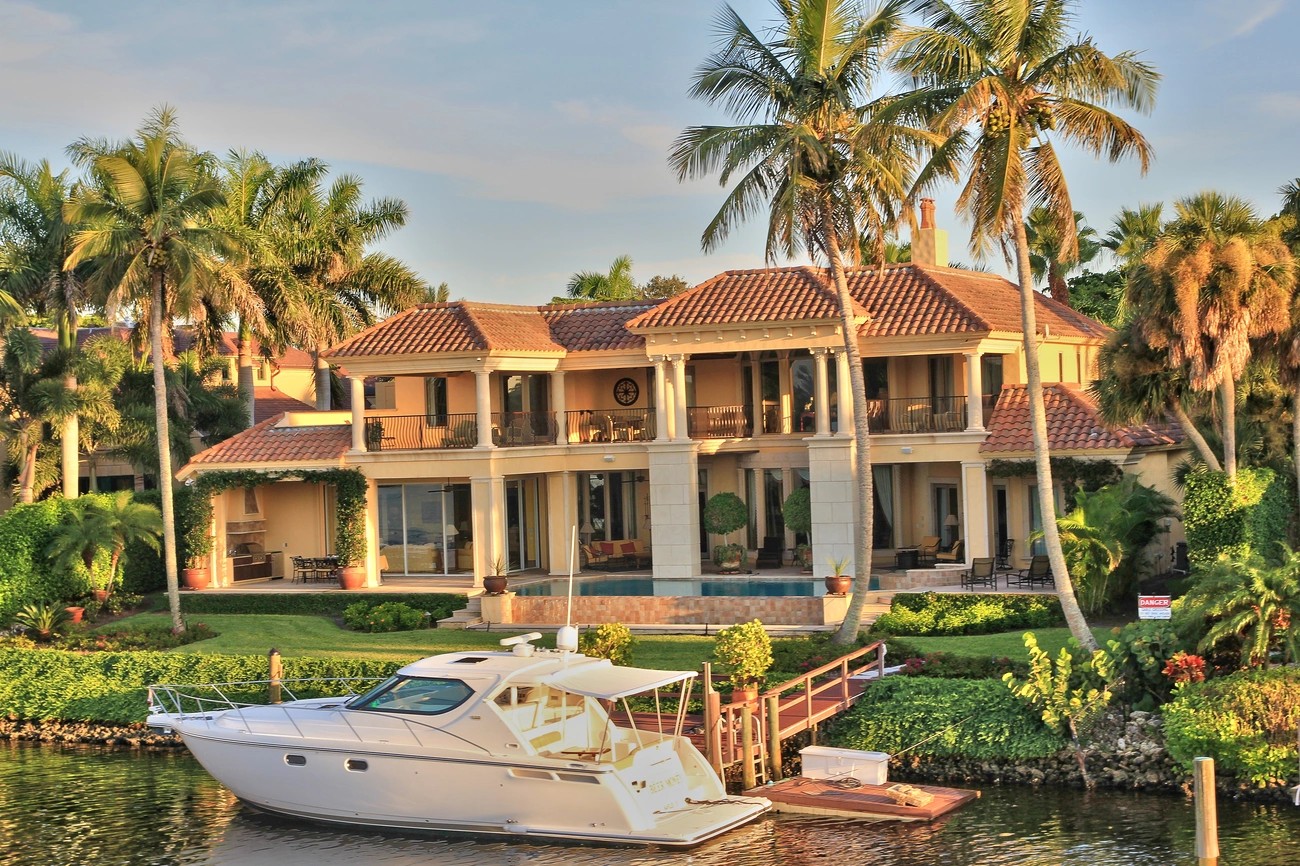
Investing in eco-friendly golf communities in Naples offers both environmental benefits and substantial financial returns. Here's what makes these properties worth serious consideration:
Naples leads this sustainable golf movement with facilities like Old Collier Golf Club (the world's first Gold Signature Sanctuary) and TPC Sawgrass, demonstrating that championship-quality golf and environmental stewardship can coexist profitably. Organic golf courses in Naples command impressive premiums. Properties sell for 7.6% more nationally, and some local estates reach 25-30% higher values[30]. Green living has moved from a niche trend to a standard in luxury real estate, as green properties now sell 9 days faster[22]. Eco-friendly golf courses address critical golf course environmental issues through water conservation and chemical-free practices, going beyond property values. Eco-friendly golf courses like TPC Sawgrass save over six million gallons of water annually[31]. We'll explore why these eco-friendly golf courses represent smart investments for 2026.
"I like that the program is realistic in its approach and sets achievable goals. Golf courses are not required to make significant and expensive changes to their infrastructure to become certified." — Darin Hull, Environmental Management Coordinator | Glen Coe Golf and Country Club
The term "organic" means different things in Naples golf course communities. Only one course in the United States operates as the Vineyard Golf Club on Martha's Vineyard, which has managed to keep championship-level turf without synthetic pesticides or fertilizers since 1993100% organic[32]. Most Naples courses pursue eco-friendly certification rather than full organic status.
True organic golf course management prohibits synthetic pesticides, herbicides, and fertilizers[33]. This approach requires experimentation and investment, which explains why genuine organic courses remain rare exceptions. Eco-friendly courses in Naples pursue this approach, which guides facilities in protecting natural resources while allowing measured chemical use. Audubon Cooperative Sanctuary Program certification
Audubon certification requires meeting minimum environmental standards in six categories: Environmental Planning, Wildlife and Habitat Management, Chemical Use Reduction and Safety, Water Conservation, Water Quality Management, and Outreach and Education[17]. Only 900+ golf courses hold this certification worldwide[3]. The program costs $150 a year for basic membership. Courses often document substantial monetary savings when comparing water bills, electric bills, and pesticide expenses before and after certification[4].
Organic management demands developing a full picture of problems as they arise. Banks, the current superintendent at Vineyard Golf Club, explained that his team feeds plants nitrogen and water to help them grow out of disease situations[34]. The basic idea is that healthier turfgrass becomes hardier and less susceptible to disease and weed invasion.
Organic courses employ biological treatments when disease patches or pest problems occur. Superintendents use biological fungicides and Organic Materials Review Institute-listed products[34]. Courses apply beneficial nematodes (microscopic worms) that attack beetle larvae feeding on turfgrass roots to manage pests[34]. Cultural practices move priorities as well. Rolling greens serves as disease control rather than speed enhancement in organic management[34].
Compost topdressing is the foundation of organic turf care programs. A thin layer of certified organic compost applied to grass improves soil structure without suffocating plants[35]. Sandy soils hold water better, and clay soils drain faster after compost applications[36]. The organic matter increases nutrient retention, buffers pH levels, improves water infiltration, and reduces compaction[36].
Premium organic compost contains diverse materials including seaweed, lobster shells, and wood chips[35]. High-quality facilities prohibit biosolids (human waste) due to heavy metal concerns and potential waterway contamination[35]. Compost also promotes biologically healthy soil by feeding earthworms and beneficial insects. Building soil profiles to the desired 3-5% organic matter requires 3-4 years of consistent applications[36].
Natural fertilizers advance beneficial soil and plant microbes without negative environmental effects[37]. Organic options include liquid biologicals containing Bacillus bacteria and Mycorrhizal fungi that optimize nutrient availability near root systems[38].
Golf courses using drought-tolerant grasses achieve conservation results. Buffalograss developed at the University of Nebraska can replace high-water-use grasses on fairways and result in water savings of 50% or more[39]. Cold-tolerant bermudagrass cultivars from Oklahoma State University allow 30% to 50% savings compared to cool-season grasses[39].
Irrigation system technologies play a critical role in sustainability. Courses use sophisticated on-site weather stations to determine daily irrigation replacement needs[39]. Hand-held moisture sensors help staff measure turf soil moisture to prevent unnecessary watering[8]. One facility reduced water use by 35% after installing a state-of-the-art irrigation system[39]. Audit-based sprinkler adjustments at Hirsala Golf in Finland produced a 50% reduction in water resources[40].
Traditional golf course maintenance creates environmental challenges that eco-friendly alternatives want to address. Golf courses require consistent applications of pesticides, herbicides, fungicides, and fertilizers to maintain pristine conditions[41]. Chemical use can be substantial even at more eco-conscious courses[41].
Chemicals applied to turfgrass don't stay in one place. Rainfall, irrigation, soil type, and local geology all influence how these substances move and spread[41]. Research shows that runoff, groundwater movement, and airborne drift affect water supplies despite regulatory guidelines[41].
Three contamination pathways pose risks. Rain and irrigation push chemicals into aquifers, causing groundwater contamination. Private wells face the biggest impact[41]. Surface water runoff carries chemicals into lakes, streams, and rivers that may supply municipal treatment plants[41]. Spray drift happens when fine mist during pesticide application travels through air and settles on nearby soil, surface water, vegetation and homes[41].
Offsite transport of pesticides from golf courses routinely affects the health of surrounding aquatic ecosystems [42]. Golf course soils and groundwater have shown high levels of arsenic from arsenic-containing pesticides[42]. Pesticides and nutrients from fertilizers can leach into nearby aquatic systems, collect in sediments, and persist in soil from 100 to well over 1,000 days after application[43].
A medical study published in the Journal of the American Medical Association found that living within one mile of a golf course was associated with 126% increased odds of developing Parkinson's disease compared with people living more than six miles away [44]. Risk steadily tapered off beyond one mile. The odds of Parkinson's diagnoses decreased by 9% for each mile of distance from a golf course[45].
Residents served by public water systems containing at least one golf course faced 96% higher Parkinson's risk compared to households whose water systems did not have a golf course[45]. The risk was 82% higher than in less vulnerable areas when a golf course was in an area with groundwater vulnerable to contamination[45].
One study identified seven pesticides in groundwater, including herbicides 2,4-D and chlorpyrifos. One pesticide in drinking water was found at levels more than 200 times the health guidance level[44]. About 77% of patients in this study relied on groundwater resources for their primary source of potable water[44].
U.S. golf courses use an estimated 0.5% of the nation's total water withdrawals for irrigation, about 2.08 billion gallons of water per day[12]. Average water use for golf course irrigation was estimated at 2,312,701 acre-feet per year from 2003-2005[6].
Water use varies substantially by region. An average 18-hole facility in the Southwest uses about four acre-feet of water per irrigated acre per year, while Northeast courses use 0.8 acre-feet[6]. The Southwest and Southeast regions accounted for 58% of total applied water in the U.S. in 2020[8].
Golf courses in the U.S. used 31% less water in 2024 than in 2005[13]. Two-thirds of this reduction resulted from operational facilities applying water more efficiently[13]. Golf course superintendents have increased the use of best management practices since 2005, leading to these reductions[13].
The most common water management practices include wetting agents, hand-watering and maintaining turf under drier conditions[13]. Since 2020, courses have increased their use of hand-held moisture sensors, adjusted irrigation schedules, conducted irrigation audits, and used evapotranspiration data from on-site weather stations [13].
Eco-friendly golf courses in Naples use specific technologies and practices that set them apart from conventional facilities. These features address golf course environmental issues while maintaining championship playing conditions.
Golf courses represent important users of reclaimed water in Florida. were irrigated with 110 million gallons per day of reclaimed water in 2001, averaging 0.26 mgd per course419 golf courses[1]. These facilities accounted for 19 percent of all reclaimed water usage statewide[1]. Several Collier County reuse systems provide reclaimed water to 10 or more golf courses. The Naples reuse system has 9 golf courses[1]. Approximately 12% of U.S. golf courses use recycled water for irrigation and preserve potable water for human consumption[5].
Native plants reduce water usage and improve wildlife habitat. They prevent soil erosion and decrease chemical dependence[14]. Native species adapt to Florida's rainfall patterns and require less irrigation than exotic alternatives[14]. Their deep root systems stabilize soil and improve fertility[14]. Native plants resist local pests, reducing pesticide needs [14]. Buffalo grass and native grasses can replace high-maintenance turf in rough areas. This cuts water use by 50% or more while reducing mowing and pesticide applications[15].
Laurel Lane Country Club installed 14 solar arrays on one acre. The system produces 216,000 kilowatt-hours annually and offsets 100 percent of the facility's electrical usage[7]. The dual-axis tracking systems follow the sun and produce 35 percent more power than fixed panels[7]. Tracy Golf and Country Club expects savings of $1.8 million over the solar system's lifespan after annual energy costs exceeded $100,000[9].
The USGA Resource Management tool allows superintendents to measure resource consumption down to the square foot[16]. This map-based system helps facilities understand labor, water, and fuel allocation across course features[16]. Courses use on-site weather stations and hand-held moisture sensors to prevent unnecessary watering[16].
Certification requires meeting standards in six environmental categories[17]. Most organizations achieve certification within one to three years, though the fastest designation occurred in six months[17]. An Audubon International staff site visit documents compliance[17]. Recertification occurs every three years to ensure continued adherence[17]. Less than 2% of the world's 32,000 golf courses hold ACSP certification[18].
Bird-friendly courses use native trees and shrubs for food sources and nesting habitats[19]. Shallow-edged ponds provide drinking and bathing access[19]. Courses install bird boxes for bluebirds and swallows while protecting existing nesting sites[19]. Dense vegetation and brush piles near wooded areas offer predator protection[19]. Maintenance schedules minimize disturbance to nesting birds[19].
Investment returns from eco-friendly golf communities extend beyond lifestyle appeal into measurable financial advantages. Multiple studies document consistent property value premiums that make these communities worth serious consideration.
The Journal of Real Estate Finance and Economics found golf course proximity increased home values by 7.6%[20]. Florida Atlantic University analyzed over 10,000 property transactions and concluded that golf course properties add between 8% and 12% to overall property value[20]. This analysis was completed recently. The National Golf Foundation's research shows homes on golf courses experience an average 15% bump in property value[21].
As with golf course proximity, properties within view of golf courses may command values up to 30% higher according to the National Recreation and Parks Association[20]. LEED-certified buildings achieved rent premiums of up to 20% in University of California studies[10]. MIT research documented a 7% increase in asset value for greener buildings compared to traditional properties[10].
Operational expenses drop substantially in eco-friendly communities. LEED buildings report almost 20% lower maintenance costs than typical buildings[11]. Green building updates can cut operating costs by almost 10% in just one year[11]. Homeowners benefit from lower energy bills with efficient appliances and solar panels. They also see reduced water costs through conservation technologies and increased property value as green homes grow in popularity[22].
The Inflation Reduction Act expanded substantial benefits for energy-efficient properties. Homeowners can claim 30% of improvement costs, up to $1,200 annually through 2025. Heat pumps and biomass equipment qualify for separate $2,000 annual limits[23]. Solar, wind, and geothermal installations receive 30% credits with no annual maximum or lifetime limit[23].
Section 179D allows commercial property deductions up to $5.94 per square foot for 2026[24]. Residential developers can claim Section 45L credits ranging from $2,500 to $5,000 per home meeting ENERGY STAR or Zero Energy Ready standards[24].
Sotheby's International Realty reports that buyers will pay more for homes that align with environmental goals[25]. Master-planned communities tend to perform better during economic hardship than other housing types[20]. This makes sustainable golf communities resilient investments today.
"We are extremely honored to achieve the esteemed recognition as a Certified Audubon Cooperative Sanctuary through the Audubon Cooperative Sanctuary Program for Golf Courses." — David Krzywonos, General Manager of Kensington Golf & Country Club.
Several Naples-area communities demonstrate how environmentally friendly golf courses deliver championship experiences while protecting natural ecosystems.
Old Collier became the first golf course in the world to receive Audubon International's Gold Signature Sanctuary status back in 1994[2]. Miles C. Collier opened the Tom Fazio-designed course in 2001, and it preserves 109 adjacent acres of continuous native habitat corridors along the Cocohatchee River, including 53 acres of mangrove and wetlands[2]. The club irrigates exclusively with brackish water and pioneered the use of salt-tolerant seashore paspalum turf from tee to green[2][26]. The final design has over 145 acres of wetland preserves and more than 45 acres of protected gopher tortoise habitat[27].
TPC Sawgrass has greatly reduced aquifer dependence, with the Valley Course using 50 percent reclaimed water for irrigation and the Stadium Course using 100 percent reclaimed water[28]. The facility has donated over 24,000 pounds of food to local shelters, recycled over 142,000 pounds of waste, and donated over 53,000 pounds of construction materials for reuse since 2022[29].
Bonita Bay protects half of its 2,400 acres, with all five golf courses following strict environmental standards[2]. Collier's Reserve, another Gold Signature Sanctuary, hosts over 400 resident species, including endangered gopher tortoises and roseate spoonbills[2]. The Club at Mediterra also maintains Audubon Signature certification[2].
Organic golf courses in Naples represent more than environmental responsibility—they're smart financial moves. Properties in these communities command premiums and sell 9 days faster than conventional homes. These communities deliver measurable returns through lower maintenance costs, tax incentives, and resilient resale values. Premiums up to 30%
Eco-friendly practices reduce water usage by 31% while preserving championship-quality conditions. Communities like Old Collier and TPC Sawgrass prove that sustainability doesn't compromise excellence.
Certified green golf communities offer compelling advantages for environmental priorities and investment returns alike—Research Naples' Audubon-certified courses before you make your decision. Your investment supports your financial future and Florida's natural ecosystems.
Naples real estate, handled properly.
Blending traditional values with modern market insight, the Quintessential Naples Team at Downing-Frye Realty delivers real estate guidance worthy of Naples’ luxury market.
#QuintessentialNaples
#Downing-FryeRealty
#NaplesRealEstate
#NaplesLuxury
#NaplesLuxuryRealEstate
#LuxuryHomesInNaples
#TrustedRealEstateAdvisor
#GenerationalWealth
#LuxuryLifestyle
#SouthwestFloridaRealEstate
Q1. Are there any fully organic golf courses in the United States? Yes, the Vineyard Golf Club on Martha's Vineyard is the only 100% organic golf course in the United States. It has maintained championship-level turf without synthetic pesticides or fertilizers since 1993. Most other courses, including those in Naples, pursue eco-friendly certification rather than full organic status.
Q2. How much water do eco-friendly golf courses save compared to traditional courses? Eco-friendly golf courses can achieve significant water savings through various methods. Courses using drought-tolerant grasses like buffalograss can reduce water usage by 50% or more, while cool-season grasses can save 30-50% compared to warm-season grasses. Overall, U.S. golf courses used 31% less water in 2024 compared to 2005, with facilities like TPC Sawgrass saving over six million gallons annually.
Q3. Do homes in golf course communities sell for higher prices? Yes, properties in golf course communities command substantial premiums. Research shows golf course proximity increases home values by 7.6% to 15% on average, with some properties within view of courses commanding values up to 30% higher. Additionally, these properties sell approximately 9 days faster than conventional homes.
Q4. What is Audubon certification for golf courses? Audubon Cooperative Sanctuary Program certification requires golf courses to meet environmental standards across six categories: Environmental Planning, Wildlife and Habitat Management, Chemical Use Reduction and Safety, Water Conservation, Water Quality Management, and Outreach and Education. Only about 900 golf courses globally hold this certification, representing less than 2% of the world's 32,000 golf courses.
Q5. What financial benefits do homeowners receive in eco-friendly golf communities? Homeowners in eco-friendly golf communities benefit from lower operational expenses, including almost 20% lower maintenance costs and reduced energy and water bills. They can also access tax incentives such as 30% credits for solar installations and up to $1,200 annually for energy-efficient improvements. Additionally, these properties maintain higher resale values and sell faster during market fluctuations.
[1] - https://floridadep.gov/sites/default/files/Reuse%20at%20golf%20courses.pdf
[2] - https://gulfshorelife.com/wellness/sporting-life/naples-golf-sustainable-solutions/
[3] - https://www.sagamoregolf.com/golf-info/course-info/audubon-certified-course
[4] - https://www.golfcourseindustry.com/article/good-to-mother-earth--the-environment--q-a-/
[6] - https://www.usga.org/content/dam/usga/pdf/Water%20Resource%20Center/how-much-water-does-golf-use.pdf
[7] - https://www.golfcourseindustry.com/article/solar-power-golf-course-management/
[8] - https://www.lightspeedhq.com/blog/why-and-how-to-have-an-eco-responsible-golf-course/
[9] - https://clubandresortbusiness.com/golf-clubs-cutting-energy-costs-with-solar-power/
[10] - https://globalrealassets.georgetown.edu/insight/sustainability-sells/
[11] - https://www.usgbc.org/press/benefits-of-green-building
[14] - https://dte.golf/role-native-plants-golf-landscaping-for-greener-approach/
[15] - https://sharpseed.com/article-guides/adding-native-grasses-to-golf-courses-is-a-gimme/
[16] - https://www.usga.org/content/usga/home-page/articles/2017/03/new-resource-management-technology.html
[17] - https://www.auduboninternational.org/acsp-for-golf
[18] - https://www.arvadaco.gov/638/Arvada-Golf-Courses-Are-Wildlife-Sanctua
[19] - https://www.fws.gov/story/bird-friendly-golf-courses
[20] - https://thehighlands.com/living-next-to-golf-course/
[22] - https://williamsluxuryhomes.com/green-golf-course-communities-2024/
[23] - https://www.irs.gov/credits-deductions/home-energy-tax-credits
[24] - https://www.jmco.com/articles/tax/green-building-tax-incentives-for-developers/
[26] - https://collierenterprises.com/clubs/
[27] - https://www.environment.com/featured-projects/florida/old-collier-golf/
[28] - https://content.govdelivery.com/accounts/FLDEP/bulletins/1448389
[29] - https://www.theplayers.com/sustainability
[31] - https://veransa.com/golf-courses-adopt-more-sustainable-landscape-management/
[32] - https://www.hole19golf.com/the-19th-hole/sustainable-golf-courses-green-revolution
[35] - https://www.puresolutions.com/pure-page/organic-lawn-care-treatment/organic-compost-topdressing/
[36] - https://www.barefootlawncare.com/residential/top-dressing/
[38] - https://sigmaagriscience.com/catalog/organic-farming/golf-courses/
[39] - https://www.usga.org/course-care/water-conservation-on-golf-courses-fbe1f5ee.html
[40] - https://sustainable.golf/news/articles/5-signifcant-ways-golf-clubs-can-save-water-cut-costs
[41] - https://www.kineticoadvancedwatersystems.com/blog/golf-course-chemicals-water-supply/
[42] - https://www.sciencedirect.com/science/article/abs/pii/S0048969723011142
[45] -https://www.parkinson.org/blog/science-news/golf-courses

Your Luxury REALTOR®, Trusted Advisor — Quintessential Naples Team at Downing-Frye Realty®Michael "Mike" Downer is the REALTOR® you want in your corner when buying or selling real es....
3 Bedrooms | 2 Bathrooms | More Than 2,000 Sq. Ft. | Fenced Backyard | Optional Boating AccessPresented by Michael Downer, Broker Associate | Downing-Frye Realty | Quintessential NaplesMore Space,
Newly Renovated | Impact Windows | New Appliances | Room for a Pool | No HOA | Golden Gate CityPresented by Michael Downer, Broker Associate | Downing-Frye Realty | Quintessential NaplesLess Fixing.
4 Bedrooms | 2 Bathrooms | Lakefront Pool Home | Reflection Lakes Presented by Mike Downer, Broker Associate | Downing-Frye Realty | Quintessential NaplesA Little More Time to Enjoy FloridaSome
2 Bedrooms | 2 Bathrooms | First-Floor Residence | Bonita SpringsPresented by Mike Downer, Broker Associate | Downing-Frye Realty | Quintessential NaplesA Simple Way to Enjoy Southwest
 All information regarding a property for sale, rental or financing, school information and public tax records is from sources deemed reliable; PROVIDED, HOWEVER, that representations and warranties are not made about the accuracy thereof, and such information is subject to errors, omissions, updates, modifications, changes of price, rent rates, commissions, prior sales, leases or financing, changes in school boundaries, or withdrawal without notice. All information displayed on this Website should
be independently verified if any person intends to engage in a transaction based upon such information.
Show More...
All information regarding a property for sale, rental or financing, school information and public tax records is from sources deemed reliable; PROVIDED, HOWEVER, that representations and warranties are not made about the accuracy thereof, and such information is subject to errors, omissions, updates, modifications, changes of price, rent rates, commissions, prior sales, leases or financing, changes in school boundaries, or withdrawal without notice. All information displayed on this Website should
be independently verified if any person intends to engage in a transaction based upon such information.
Show More...
 © 2026 Florida Gulf Coast MLS (FGCMLS) Information deemed reliable, but not guaranteed. The IDX data relating to real estate for sale on this web site comes in part from the Florida Gulf Coast Multiple Listing Service. The information being provided is for consumers' personal, non-commercial use and may not be used for any purpose other than to identify prospective properties consumers may be interested in purchasing. Information is deemed reliable but not guaranteed.
 This data is up-to-date as of September 25, 2026 6:55 PM UTC Some properties that appear for sale on this website may subsequently have sold and may no longer be available. For the most current information, contact Downing-Frye Realty.
The information provided is for consumers' personal, non-commercial use and may not be used for any other purpose. The data relating to real estate for sale on this website comes in part from the Broker Reciprocity Program (BR Program) of M.L.S. of Naples, Inc.,
Florida Gulf Coast MLS, Marco Multi-List, Inc., My Florida Regional MLS, or Miami Association of Realtors. Properties listed with brokerage firms other than Downing-Frye Realty are marked with the BR Program Icon or the BR House Icon and detailed information about them includes the name of the listing brokers. The properties displayed may not be all the properties available through the BR Program. The data provided by the Broker Reciprocity Program, and the Information is Deemed Reliable But Not Guaranteed. The source of the information about real property available for sale or rent is the copyrighted and proprietary database of the M.L.S. of Naples, Inc., Florida Gulf Coast MLS, Marco Multi-List, Inc., My Florida Regional MLS, or Miami Association of Realtors. Copyright 2026 M.L.S. of Naples, Inc., Florida Gulf Coast MLS, Marco Multi-List, Inc., My Florida Regional MLS, Miami Association of Realtors.; all rights reserved.
Show More...
This data is up-to-date as of September 25, 2026 6:55 PM UTC Some properties that appear for sale on this website may subsequently have sold and may no longer be available. For the most current information, contact Downing-Frye Realty.
The information provided is for consumers' personal, non-commercial use and may not be used for any other purpose. The data relating to real estate for sale on this website comes in part from the Broker Reciprocity Program (BR Program) of M.L.S. of Naples, Inc.,
Florida Gulf Coast MLS, Marco Multi-List, Inc., My Florida Regional MLS, or Miami Association of Realtors. Properties listed with brokerage firms other than Downing-Frye Realty are marked with the BR Program Icon or the BR House Icon and detailed information about them includes the name of the listing brokers. The properties displayed may not be all the properties available through the BR Program. The data provided by the Broker Reciprocity Program, and the Information is Deemed Reliable But Not Guaranteed. The source of the information about real property available for sale or rent is the copyrighted and proprietary database of the M.L.S. of Naples, Inc., Florida Gulf Coast MLS, Marco Multi-List, Inc., My Florida Regional MLS, or Miami Association of Realtors. Copyright 2026 M.L.S. of Naples, Inc., Florida Gulf Coast MLS, Marco Multi-List, Inc., My Florida Regional MLS, Miami Association of Realtors.; all rights reserved.
Show More...
