3 Bedrooms | 2 Bathrooms | More Than 2,000 Sq. Ft. | Fenced Backyard | Optional Boating AccessPresented by Michael Downer, Broker Associate | Downing-Frye Realty | Quintessential NaplesMore Space,

Dated: August 6 2026
Views: 173
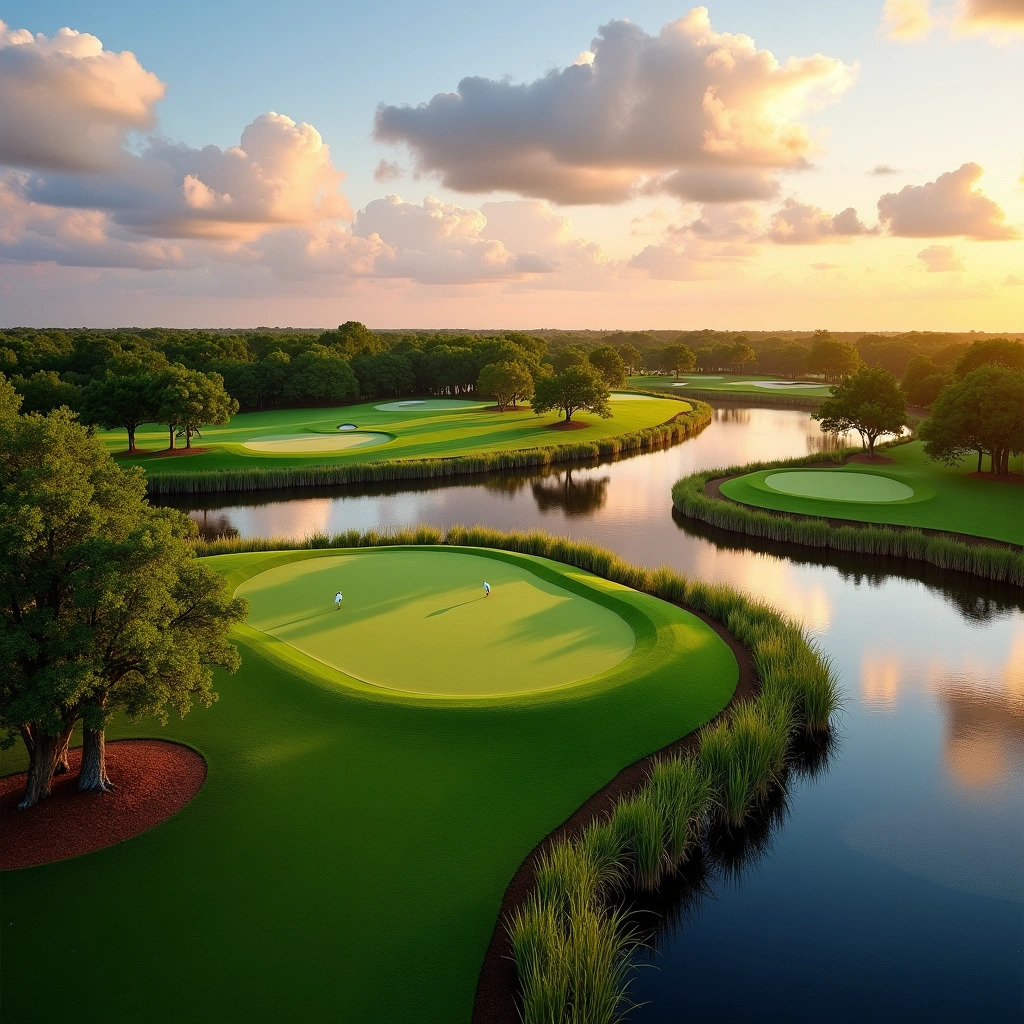
Naples is revolutionizing luxury golf living by proving that environmental sustainability and premium amenities can coexist. With 21 Audubon-certified courses leading the nation, these eco-friendly communities are setting new standards for responsible development while delivering tangible benefits to residents and the environment.
The shift toward organic golf courses represents more than an environmental trend—it's a smart investment in health, property value, and quality of life that's reshaping Naples into a model for sustainable luxury communities nationwide. Organic golf courses are making Naples a leader in eco-friendly luxury living. Florida is home to more Audubon-certified courses than any other state, and Naples has 21 certified clubs[2]. These eco-friendly golf courses are saving millions of gallons of water each year[22] while protecting vital wildlife habitats.
Are golf courses bad for the environment? Traditionally, yes. But eco-friendly golf courses in Naples are proving otherwise. From Audubon-certified golf course standards to brackish-water irrigation systems, these courses are setting new standards. Homes in these communities sell for 30% more than traditional neighborhoods[23]. This reflects a growing need among residents who value both luxury and environmental stewardship.
We'll explore what makes these courses eco-friendly and why Naples residents are choosing them.
"Reducing pesticide application frequency is not simple. It may require 'leaps of faith' to withhold pesticide applications." — Michael A.H. Bekken, Doctoral student
Florida's porous sandy soil creates a unique environmental challenge for golf courses. Chemicals applied to turf don't stay on the surface. Therefore, they seep through the soil into underground aquifers and watershed systems, contaminating potential drinking water sources.
The federal standard for nitrate-nitrogen in drinking water is 10 parts per million[1]. Golf courses apply substantial nitrogen-based fertilizers to maintain lush greens, and Florida's geology accelerates the movement of these nutrients into groundwater. Research shows that groundwater beneath four Cape Cod golf courses was contaminated with seven different pesticides, including chlorpyrifos and 2,4-D. Pesticide levels were more than 200 times greater than health guidance levels[24].
Recent studies have raised health concerns. People living within one mile of a golf course had compared to those living more than six miles away126% increased odds of developing Parkinson's disease[25]. Those receiving drinking water from municipal systems that include a golf course in their watershed had nearly twice the odds of developing Parkinson's[25]. The pesticides used on turf don't just disappear after application. They migrate through soil and enter aquifers, and can end up in tap water.
Over 50 pesticides are used in the golf industry, with individual courses applying four to twelve different chemicals per year[1]. These substances can leach into groundwater, be carried away by stormwater runoff, or drift on wind currents during application[1].
Golf courses consume large amounts of water. Courses in the United States use 2.08 billion gallons of water daily for irrigation[26]. A typical 150-acre golf course uses around 200 million gallons each year[27]. Florida golf courses in 2001 used 187 million gallons per day of freshwater, plus an additional 110 million gallons of reclaimed water[5].
Nitrogen and phosphorus from fertilizer runoff fuel harmful algal blooms. Red tides occur naturally offshore. These blooms intensify when they move inshore and encounter nutrient-rich coastal runoff[28]. Lake Okeechobee, polluted by nutrients from agricultural operations including golf courses, releases contaminated water into the Caloosahatchee River during flood control operations. This exacerbates red tide events in the Gulf[29].
"Sustainability is about utilizing the resources and knowledge you have on hand to enhance the environment and your stakeholders further." — Kevin Kolesar, General Manager at Washington Golf Course and Learning Center.
Golf courses with green practices operate under strict environmental protocols that fundamentally change how turf is managed. The move from chemical-dependent maintenance to organic and eco-friendly practices addresses the environmental damage discussed earlier.
The Audubon Cooperative Sanctuary Program for Golf Courses establishes measurable standards across six environmental categories: Environmental Planning, Wildlife and Habitat Management, Chemical Use Reduction and Safety, Water Conservation, Water Quality Management, and Outreach and Education[4]. More than 2,200 golf courses worldwide have enrolled in this program, yet fewer than 2% achieve full certification[7]. Most organizations reach designation within one to three years. The fastest certification occurred in just six months[4].
Native plants need less irrigation since they've adapted to Florida's natural rainfall patterns[8]. Research shows that native grasses like alkali sacaton and blue grama thrive with only. Overseeded bermudagrass demands about 6 feet (12- 15 inches of irrigation annually[9]. These indigenous species provide habitat for pollinators and birds. Their deep root systems prevent soil erosion[8].
Compost-based fertilizers provide slow-release nutrients and improve soil structure and water retention[3]. Microbial soil enhancers introduce beneficial bacteria and fungi that form symbiotic relationships with grass roots. This improves nutrient uptake[3]. Integrated Pest Management can result in 33-96% less environmental effect without reducing course quality[3].
Seashore paspalum grass tolerates high-salt water. This allows courses to irrigate with brackish sources that otherwise have little use[6]. Old Collier Golf Club in Naples uses ocean water from a nearby estuary bay through a state-of-the-art irrigation system[6]. Reverse osmosis treatment costs between $0.50 and $1.45 per thousand gallons when brackish water is available[10].
Certified courses maintain natural wildlife habitat in at least 50% of minimally used portions of the property[11]. They establish habitat corridors connecting woods and meadows, both inside and outside property boundaries[11].
Several Naples courses demonstrate how environmentally responsible practices translate into real-life environmental success stories.
Old Collier became the first course worldwide to receive Gold Signature Sanctuary status in 1994 [2]. The club opened in 2001 and preserves 53 acres of mangrove and wetlands along the Cocohatchee River plus 109 adjacent acres of continuous native habitat corridors[2]. Tom Fazio's design integrates golf within this natural environment[12]. The trailblazing use of salt-tolerant seashore paspalum from tee to green eliminates the need for freshwater irrigation[2].
Olde Florida protected 120 of its 220 acres as woodland and wetland habitats that support as many as 75 bird species[2]. The course has built nesting structures and created reintroduction programs for native wildlife[2].
At Bonita Bay, about half of the 2,400 acres are protected. All five golf courses follow the same environmental standards[2]. The grounds team consists of arborists and certified horticultural professionals[2].
Wilderness sits on 200 forested acres and has maintained Audubon Cooperative Sanctuary certification since 1999[13]. More than 80 species of birds have been documented within the community[13]. Wilderness cooperates with the Conservancy of Southwest Florida to monitor wildlife[2].
Financial performance drives many real estate decisions, and eco-friendly golf communities deliver measurable returns. Property values inside golf communities increased 48% across the U.S. since March 2020[14]. Sustainability has changed from niche trend to standard expectation in high-end real estate[15].
Homes in sustainable golf communities maintain or increase value more consistently than properties in other locations and perform better even during economic downturns[16]. Green living is becoming a major selling point for homebuyers[17].
Energy-efficient appliances and solar panels reduce electricity bills, while water conservation technologies cut monthly utility expenses[15]. These features provide benefits beyond environmental effects.
represents one of the simplest human needs for health and well-being: safe water access[18]. Organic golf courses eliminate the pesticide exposure risks associated with traditional courses, where contaminated groundwater can affect nearby residents[19].
Trails for walking and biking promote low-impact recreation[17], while observation areas provide opportunities for bird watching and photography[20].
Residents value living where environmental footprints are taken seriously[21]. Audubon certifications and green practices create community pride through visible environmental commitment.
Naples has proven that luxury golf living doesn't require environmental compromise. With 21 Audubon-certified courses protecting wildlife and water quality, eco-friendly communities deliver measurable benefits for both residents and the environment while increasing property values.
We're witnessing a fundamental change in how Florida approaches golf course development. These green communities give you healthier living conditions and lower utility costs without sacrificing the premium lifestyle you expect. You also get the satisfaction of environmental stewardship.
Real estate should feel confident, not complicated.
Through clear communication and structured guidance, the Quintessential Naples Team at Downing-Frye Realty simplifies complex transactions without sacrificing precision or professionalism.
#QuintessentialNaples
#Downing-FryeRealty
#NaplesRealEstate
#NaplesLuxury
#NaplesLuxuryRealEstate
#LuxuryHomesInNaples
#TrustedRealEstateAdvisor
#GenerationalWealth
#LuxuryLifestyle
#SouthwestFloridaRealEstate
Q1. Are there golf courses that use organic or eco-friendly maintenance practices? Yes, several golf courses have adopted organic and sustainable practices. These courses use compost-based fertilizers, native vegetation, and integrated pest management instead of chemical treatments. Many participate in certification programs like the Audubon Cooperative Sanctuary Program, which requires strict environmental standards across water conservation, wildlife habitat management, and chemical reduction.
Q2. What makes a golf course environmentally sustainable? Sustainable golf courses implement several key practices: they use native, drought-resistant plants that require less irrigation; employ brackish or reclaimed water systems instead of freshwater; apply compost-based soil management rather than chemical fertilizers; preserve at least 50% of their property as natural wildlife habitat; and achieve third-party certifications like Audubon Gold Signature status that verify their environmental commitments.
Q3. How do eco-friendly golf courses benefit homeowners financially? Homes in sustainable golf communities have shown significant financial advantages. Property values in these communities increased 48% since March 2020 and typically sell for 30% more than traditional neighborhoods. Residents also enjoy lower utility costs through water conservation technologies and energy-efficient features, while these properties maintain value better during economic downturns.
Q4. Do traditional golf courses pose environmental or health risks? Traditional golf courses can impact the environment through heavy pesticide and fertilizer use, which seeps through Florida's sandy soil into groundwater. Studies show people living within one mile of conventional golf courses have 126% increased odds of developing Parkinson's disease. These courses also consume approximately 200 million gallons of water annually and contribute to harmful algal blooms through nutrient runoff.
Q5. Which Naples golf courses are leaders in environmental sustainability? Old Collier Golf Club became the world's first Gold Signature Sanctuary in 1994 and uses salt-tolerant grass irrigated with ocean water. Olde Florida preserves 120 acres as wildlife habitat supporting 75 bird species. Bonita Bay protects half of its 2,400 acres across five certified courses. At the same time, Wilderness Country Club has maintained Audubon certification since 1999 and partners with the Conservancy of Southwest Florida for wildlife monitoring.
[1] - https://floridadep.gov/sites/default/files/glfbmp07.pdf
[2] - https://gulfshorelife.com/wellness/sporting-life/naples-golf-sustainable-solutions/
[3] - https://fsm.how/facility-management-applications-li/sustainable-golf-course-management/
[4] - https://www.auduboninternational.org/acsp-for-golf
[5] - https://floridadep.gov/sites/default/files/Reuse%20at%20golf%20courses.pdf
[6] - https://www.usga.org/course-care/water-conservation-on-golf-courses-fbe1f5ee.html
[7] - https://www.arvadaco.gov/638/Arvada-Golf-Courses-Are-Wildlife-Sanctua
[8] - https://dte.golf/role-native-plants-golf-landscaping-for-greener-approach/
[10] - https://www.watermanagementgroup.com/golf-course-irrigation
[12] - https://collierenterprises.com/clubs/
[13] - https://wildernesscc.com/about-us
[14] - https://golf.com/lifestyle/property-value-golf-communities-skyrocket/
[15] - https://williamsluxuryhomes.com/green-golf-course-communities-2024/
[16] - https://stonefieldhomes.com/perks-of-golf-course-living/
[17] - https://www.privatecommunities.com/blog/how-golf-communities-benefit-the-environment.htm
[18] - https://www.un.org/sustainabledevelopment/water-and-sanitation/
[19] - https://www.parkinson.org/blog/science-news/golf-courses
[20] - https://www.thevillages.com/trails-parks/nature/
[21] - https://www.nytimes.com/2020/03/06/realestate/sustainable-golf-communities.html
[22] - https://veransa.com/golf-courses-adopt-more-sustainable-landscape-management/
[24] - https://www.gwpc.org/wp-content/uploads/2024/10/GWPC_slides_Krzyzanowski_forsharing.pdf
[26] - https://www.usga.org/content/dam/usga/pdf/Water%20Resource%20Center/how-much-water-does-golf-use.pdf
[27] - https://www.fluencecorp.com/golf-course-water-use/
[28] - https://coastalscience.noaa.gov/news/powers-florida-red-tides/

Your Luxury REALTOR®, Trusted Advisor — Quintessential Naples Team at Downing-Frye Realty®Michael "Mike" Downer is the REALTOR® you want in your corner when buying or selling real es....
3 Bedrooms | 2 Bathrooms | More Than 2,000 Sq. Ft. | Fenced Backyard | Optional Boating AccessPresented by Michael Downer, Broker Associate | Downing-Frye Realty | Quintessential NaplesMore Space,
Newly Renovated | Impact Windows | New Appliances | Room for a Pool | No HOA | Golden Gate CityPresented by Michael Downer, Broker Associate | Downing-Frye Realty | Quintessential NaplesLess Fixing.
4 Bedrooms | 2 Bathrooms | Lakefront Pool Home | Reflection Lakes Presented by Mike Downer, Broker Associate | Downing-Frye Realty | Quintessential NaplesA Little More Time to Enjoy FloridaSome
2 Bedrooms | 2 Bathrooms | First-Floor Residence | Bonita SpringsPresented by Mike Downer, Broker Associate | Downing-Frye Realty | Quintessential NaplesA Simple Way to Enjoy Southwest
 All information regarding a property for sale, rental or financing, school information and public tax records is from sources deemed reliable; PROVIDED, HOWEVER, that representations and warranties are not made about the accuracy thereof, and such information is subject to errors, omissions, updates, modifications, changes of price, rent rates, commissions, prior sales, leases or financing, changes in school boundaries, or withdrawal without notice. All information displayed on this Website should
be independently verified if any person intends to engage in a transaction based upon such information.
Show More...
All information regarding a property for sale, rental or financing, school information and public tax records is from sources deemed reliable; PROVIDED, HOWEVER, that representations and warranties are not made about the accuracy thereof, and such information is subject to errors, omissions, updates, modifications, changes of price, rent rates, commissions, prior sales, leases or financing, changes in school boundaries, or withdrawal without notice. All information displayed on this Website should
be independently verified if any person intends to engage in a transaction based upon such information.
Show More...
 © 2026 Florida Gulf Coast MLS (FGCMLS) Information deemed reliable, but not guaranteed. The IDX data relating to real estate for sale on this web site comes in part from the Florida Gulf Coast Multiple Listing Service. The information being provided is for consumers' personal, non-commercial use and may not be used for any purpose other than to identify prospective properties consumers may be interested in purchasing. Information is deemed reliable but not guaranteed.
 This data is up-to-date as of September 25, 2026 6:55 PM UTC Some properties that appear for sale on this website may subsequently have sold and may no longer be available. For the most current information, contact Downing-Frye Realty.
The information provided is for consumers' personal, non-commercial use and may not be used for any other purpose. The data relating to real estate for sale on this website comes in part from the Broker Reciprocity Program (BR Program) of M.L.S. of Naples, Inc.,
Florida Gulf Coast MLS, Marco Multi-List, Inc., My Florida Regional MLS, or Miami Association of Realtors. Properties listed with brokerage firms other than Downing-Frye Realty are marked with the BR Program Icon or the BR House Icon and detailed information about them includes the name of the listing brokers. The properties displayed may not be all the properties available through the BR Program. The data provided by the Broker Reciprocity Program, and the Information is Deemed Reliable But Not Guaranteed. The source of the information about real property available for sale or rent is the copyrighted and proprietary database of the M.L.S. of Naples, Inc., Florida Gulf Coast MLS, Marco Multi-List, Inc., My Florida Regional MLS, or Miami Association of Realtors. Copyright 2026 M.L.S. of Naples, Inc., Florida Gulf Coast MLS, Marco Multi-List, Inc., My Florida Regional MLS, Miami Association of Realtors.; all rights reserved.
Show More...
This data is up-to-date as of September 25, 2026 6:55 PM UTC Some properties that appear for sale on this website may subsequently have sold and may no longer be available. For the most current information, contact Downing-Frye Realty.
The information provided is for consumers' personal, non-commercial use and may not be used for any other purpose. The data relating to real estate for sale on this website comes in part from the Broker Reciprocity Program (BR Program) of M.L.S. of Naples, Inc.,
Florida Gulf Coast MLS, Marco Multi-List, Inc., My Florida Regional MLS, or Miami Association of Realtors. Properties listed with brokerage firms other than Downing-Frye Realty are marked with the BR Program Icon or the BR House Icon and detailed information about them includes the name of the listing brokers. The properties displayed may not be all the properties available through the BR Program. The data provided by the Broker Reciprocity Program, and the Information is Deemed Reliable But Not Guaranteed. The source of the information about real property available for sale or rent is the copyrighted and proprietary database of the M.L.S. of Naples, Inc., Florida Gulf Coast MLS, Marco Multi-List, Inc., My Florida Regional MLS, or Miami Association of Realtors. Copyright 2026 M.L.S. of Naples, Inc., Florida Gulf Coast MLS, Marco Multi-List, Inc., My Florida Regional MLS, Miami Association of Realtors.; all rights reserved.
Show More...
