3 Bedrooms | 2 Bathrooms | More Than 2,000 Sq. Ft. | Fenced Backyard | Optional Boating AccessPresented by Michael Downer, Broker Associate | Downing-Frye Realty | Quintessential NaplesMore Space,

Dated: July 27 2026
Views: 132
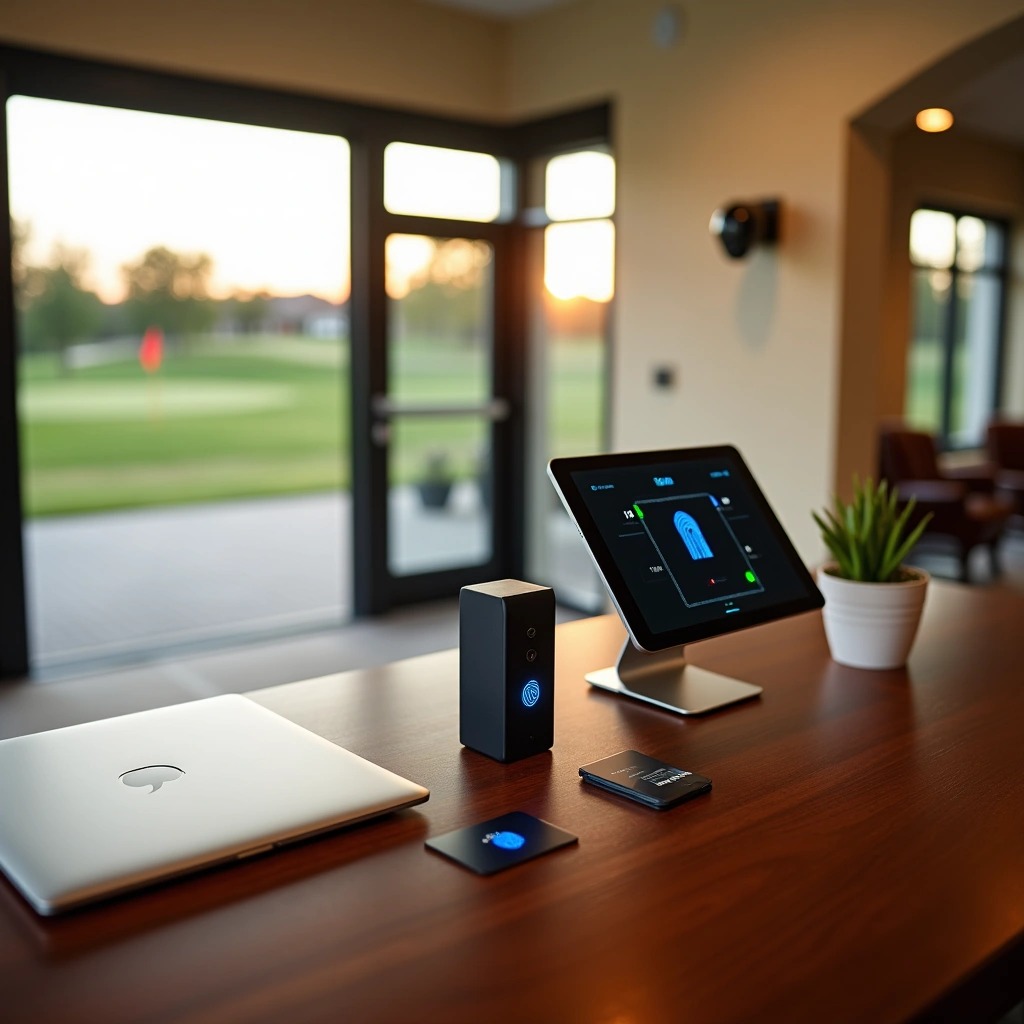
Golf clubs face unprecedented security threats as digital transformation creates vulnerabilities that cybercriminals actively exploit. With 95,040 hospitality sector vulnerabilities discovered and high-profile attacks already disrupting major facilities, the time to act is now.
Don't wait for an attack to expose your vulnerabilities. Begin with a security assessment and implement multi-factor authentication immediately—these affordable first steps provide substantial protection while you develop your comprehensive upgrade plan. Technology and golf have become inseparable in recent years, but this digital transformation has created unexpected vulnerabilities. Golf enjoyed a boom with about 500 million rounds played during the pandemic[25], and cybercriminals took notice. By April 2025, vulnerabilities were found across the hospitality sector, with 14,318 being critical and 95,040 vulnerabilities[4]. High-profile attacks have struck already, such as the K Club in Ireland facing ransomware disruption before the Irish Open, and American Golf Corporation allegedly losing 154.9 GB of sensitive data[4]. So golf course technology and golf club technology infrastructure require security upgrades. In this piece, we'll get into the growing threats facing clubs and the smart technologies needed to protect your members and operations.
"You are on their radar and are one of their best targets." — Fred Santarsiere, Forensic investigator and expert in computer hacking.
Ransomware locks files and systems and demands payment to restore access. Clubs lose booking systems, membership records, financial data, and competition results when it hits[26]. A Midwestern club found that ransomware made its tee sheet unavailable for three days. Staff had to manage schedules manually and process refunds [2]. The Country Club at Woodfield in Boca Raton experienced a cyberattack affecting approximately 4,000 members[3]. Cal Club fell victim to the Qilin ransomware gang, which resulted in 10GB of member data theft[3].
Most attacks start small. A staff member downloads an infected file, clicks a rogue link, or uses outdated software[26]. Malware might lurk quietly before locking everything at once during the attack itself. Business email compromise also targets accounting teams. Attackers impersonated a turf supplier and convinced a club to send a five-figure payment to a fraudulent account after they compromised an employee's email login[2].
Physical vulnerabilities create pathways for data theft. Server closets in country clubs can be left unlocked, allowing guests to access them easily [4]. An attacker penetrated a club's network through an outdated Wi-Fi access point at the tennis pavilion in one case. This resulted in a full network shutdown and rebuild[2]. Hackers infiltrated Wentworth Golf Club's IT system. They downloaded files containing names, dates of birth, home addresses, email addresses, and the last four digits of bank accounts for its whole membership of 4,000 members[27].
Golf clubs store member information, financial details, invoices, staff data and booking records[26]. Clubs often have more connected devices than they realize: tills, tablets, old office PCs, clubhouse Wi-Fi access points, CCTV cameras, pro shop systems and weather station tech[26]. Many clubs rely on part-time staff, volunteers or committee members juggling multiple roles. Cyber awareness varies from person to person. IT setups often grow organically rather than following structured security plans[26]. Committee turnover causes inconsistent access controls[28].
The average cost of a data breach for country clubs is USD 1.20 million[3]. This includes legal fees, regulatory penalties, loss of member trust, and reputational damage. Research shows 66% of US consumers are inclined to distrust a company once it has been compromised by a data breach[6], and 75% would think over cutting ties with the brand entirely[6].
Many golf properties still rely on outdated tee sheets and aging POS systems built before modern cybersecurity threats emerged. These legacy platforms lack vendor support. No security updates or patches arrive when new vulnerabilities surface. Involve legacy systems that lacked modern access controls or received no recent patches. Over 60% of data breaches[7]. Attackers target these systems with publicly known exploits. Golf clubs operate multiple POS terminals in pro shops, restaurants, halfway houses, and poolside bars. Outdated software creates security gaps and gives attackers opportunities to install malware that skims credit card data[2]. Several private clubs in the Southeast were compromised for weeks before being detected, with POS malware capturing members' credit card data [2].
Clubs are seen as exclusive and secure, yet discretion can undermine attempts to enforce security plans and measures[8]. Only 41% of clubs conduct annual vulnerability assessments[3]. We see establishments that rely on reputation and exclusivity while they maintain inadequate security infrastructure. Staff members have access to all areas, which makes managing property nearly impossible[9]. A director of food and beverage noticed their tequila budget had skyrocketed over two months because someone on staff was helping themselves[9].
Mobile check-in, smart thermostats, and keyless lockers get layered onto unstable foundations. This creates complexity. Unpatched systems and poor integration make breaches more likely and defenses harder to maintain[10]. Golf course technology advances while security infrastructure stagnates.
Topgolf Callaway experienced a major breach that affected over 1 million customers[11]. Performance Golf stores passwords in plain text, available to all staff and automated systems[12]. This represents the data security equivalent of chaining fire exit doors shut[12].
AI-driven video analytics distinguish between a raccoon by the dumpster and an actual intruder, routine staff traffic, and unusual after-hours movement[13]. Systems track parking utilization during peak events, after-hours building access trends, and valet usage patterns[13]. One CFO used AI surveillance to monitor available parking spots and push members toward valet service during big events. This increased valet revenue while improving member experience[13].
Mobile access systems allow clubs to through 24/7 facility accessgrow premium memberships by 18%[14]. Biometric fingerprint recognition and facial scanning eliminate lost keycards and prevent unauthorized entry[15]. Members can authorize charges for drinks or equipment using fingerprint scans[15]. Palm vein scanning secures VIP-only spaces[15]. Digital credentials help clubs slash key-management costs by 62%[14].
Cloud services safeguard servers and communications while maintaining backups to avoid data loss[16]. Data gets encrypted, backed up on its own, and monitored around the clock[17]. Callaway migrated to cloud-based data protection across ten global data centers and, within months, achieved 95% implementation[18].
Loudspeaker systems, SMS alerts, and smartphone app notifications reach everyone on property during emergencies instantly[1]. Golf cart patrols combined with two-way radios provide coverage efficiently[1].
First-party coverage has legal counsel, data recovery, customer notification, lost income, crisis management, and extortion response[19]. Third-party coverage handles consumer claims, litigation costs, and regulatory questions[19]. Multi-factor authentication prevents 99% of cyber attacks. Many carriers require it before offering proposals[20].
"A security risk assessment provides a structured way to understand where you are truly exposed, and shifts security conversations from technical issues to business-level risk." — Vistrada, Provider of vCISO services.
Create a regular ongoing inventory of networks, including addresses, OS versions, open ports, and installed applications[4]. Conduct baseline cyber risk assessments and identify potential weaknesses before cybercriminals exploit them[2]. Penetration testing uncovers vulnerabilities through simulated attacks[5]. Get into existing policies, access controls, surveillance systems, and perimeter security during facility walkthroughs[21].
Assemble qualified individuals who understand security protocols and compliance standards[21]. Include internal security experts, IT personnel, and external consultants for unbiased assessment[21]. Define a clear chain of command during crises and assign specific responsibilities to each team member[22].
Human error causes most cyber incidents[23]. Conduct cybersecurity training for all employees using real-life phishing examples that target clubs[2]. Short, engaging lessons completed in minutes work better than annual marathons[23]. Platform-based training tracks progress and identifies who needs extra support[23].
Many clubs partner with MSPs specializing in golf and country club operations [5], providing vetted guards and customized strategies. Professional security providers offer 24/7 monitoring[24].
Focus improvements on incident response planning, baseline assessments, staff training, multi-factor authentication, POS updates, and offline backups[2]. Prepare business cases that show ROI through prevented breaches and reduced insurance premiums.
Security breaches are hitting golf clubs harder than ever before. Outdated systems won't protect your members or operations. We've shown you the real threats and the technologies that work to counter them.
Start with a vulnerability assessment and staff training. These foundational steps cost less than you think and deliver protection way beyond the investment. Your members expect security that matches your club's reputation, so give it to them.
From first showing to final signature, strategy matters.
The Quintessential Naples Team at Downing-Frye Realty aligns pricing, timing, and negotiation expertise to protect equity and maximize outcomes in Naples’ competitive luxury real estate market.
#QuintessentialNaples
#Downing-FryeRealty
#NaplesRealEstate
#NaplesLuxury
#NaplesLuxuryRealEstate
#LuxuryHomesInNaples
#TrustedRealEstateAdvisor
#GenerationalWealth
#LuxuryLifestyle
#SouthwestFloridaRealEstate
Q1. How does technology improve security at golf clubs? Technology enhances security through real-time monitoring and threat detection. Advanced analytics tools, AI-powered surveillance systems, and cloud-based solutions allow golf clubs to identify and respond to security risks immediately, whether they're cyber threats or physical breaches, making protection more efficient and scalable than traditional methods.
Q2. Why are golf clubs considered prime targets for cyberattacks? Golf clubs store valuable member information, including financial details, personal data, and payment records, across multiple connected devices like POS systems, tablets, and Wi-Fi networks. Many facilities rely on part-time staff with varying levels of cyber awareness and often use outdated technology with inconsistent security protocols, making them attractive targets for hackers.
Q3. What is the average cost of a data breach for a country club? The average cost of a data breach for country clubs is approximately USD 1.20 million. This includes legal fees, regulatory penalties, system recovery costs, and reputational damage. Additionally, research shows that 66% of consumers lose trust in a company after a breach, with 75% considering ending their relationship with the brand entirely.
Q4. How often should golf clubs update their security systems? Golf clubs should conduct annual vulnerability assessments and update security infrastructure every 5-7 years at minimum. However, critical components like POS systems, access controls, and cybersecurity software require more frequent updates and patches. Staff training should be ongoing, and clubs should implement multi-factor authentication and regular backup protocols immediately.
Q5. What security technologies should modern golf clubs prioritize? Modern golf clubs should invest in AI-powered surveillance systems, biometric access control, cloud-based data protection with automatic backups, and integrated emergency communication tools. These technologies provide real-time monitoring, prevent unauthorized access, protect member data, and enable rapid response during security incidents while reducing long-term operational costs.
[1] - https://fsm.how/facility-management-applications-li/golf-course-safety-security-risk-management/
[2] - https://alliant.com/news-resources/article-cybersecurity-for-golf-courses-and-country-clubs/
[5] - https://www.entechus.com/blogs/are-private-golf-and-country-clubs-at-risk-for-a-cybersecurity-attack
[6] - https://fintech.global/2024/09/03/the-high-cost-of-cybersecurity-breaches-on-corporate-reputation/
[7] - https://www.bitlyft.com/resources/overcoming-the-challenges-of-securing-legacy-systems?hs_amp=true
[8] - https://reliablesecurityplus.com/country-club-golf-course-security/
[9] - https://macrotekservices.com/video-surveillance/private-club-access-control-best-practices/
[10] - https://www.nexustek.com/insights/golf-it-challenges-part-1?hs_amp=true
[11] - https://www.teesnap.com/blog/is-your-golf-course-solution-secure/
[12] - https://www.reddit.com/r/golf/comments/1rh6bwd/heads_up_performance_golf_security_issue/
[13] - https://www.macrotekservices.com/video-surveillance/ai-security-private-club-growth/
[14] - https://www.nexkey.com/golf-clubs
[15] - https://clubsupportinc.com/blog/biometric-access-control-for-club-facilities/
[16] - https://eclarity.co.uk/sectors/it-services-and-support-for-golf-clubs/
[17] - https://www.systemscloud.co.uk/post/bringing-your-club-s-it-into-the-present
[18] - https://www.hycu.com/blog/hycu-drives-callaways-modern-golf-innovation
[19] - https://www.ftc.gov/business-guidance/small-businesses/cybersecurity/cyber-insurance
[20] - https://www.wellsins.com/resources/overlooked-exposures-in-the-golf-industry-cyber-liability
[21] - https://securityforcenow.com/how-to-conduct-a-security-audit-a-step-by-step-guide/
[22] - https://www.hftp.org/blog/elevating-club-safety-guide
[23] - https://www.linksguard.co.uk/cyber-awareness-training-for-golf-clubs
[24] - https://oscguards.com/country-club-security-services/
[25] - https://relaypro.com/blog/why-golf-club-operations-are-embracing-technology/
[26] - https://www.linksguard.co.uk/blog/common-cyber-attacks-golf-clubs
[27] - https://www.decisionmarketing.co.uk/news/fore-top-golf-club-warns-members-over-data-breach
[28] -https://www.linksguard.co.uk/cyber-security-for-golf-clubs

Your Luxury REALTOR®, Trusted Advisor — Quintessential Naples Team at Downing-Frye Realty®Michael "Mike" Downer is the REALTOR® you want in your corner when buying or selling real es....
3 Bedrooms | 2 Bathrooms | More Than 2,000 Sq. Ft. | Fenced Backyard | Optional Boating AccessPresented by Michael Downer, Broker Associate | Downing-Frye Realty | Quintessential NaplesMore Space,
Newly Renovated | Impact Windows | New Appliances | Room for a Pool | No HOA | Golden Gate CityPresented by Michael Downer, Broker Associate | Downing-Frye Realty | Quintessential NaplesLess Fixing.
4 Bedrooms | 2 Bathrooms | Lakefront Pool Home | Reflection Lakes Presented by Mike Downer, Broker Associate | Downing-Frye Realty | Quintessential NaplesA Little More Time to Enjoy FloridaSome
2 Bedrooms | 2 Bathrooms | First-Floor Residence | Bonita SpringsPresented by Mike Downer, Broker Associate | Downing-Frye Realty | Quintessential NaplesA Simple Way to Enjoy Southwest
 All information regarding a property for sale, rental or financing, school information and public tax records is from sources deemed reliable; PROVIDED, HOWEVER, that representations and warranties are not made about the accuracy thereof, and such information is subject to errors, omissions, updates, modifications, changes of price, rent rates, commissions, prior sales, leases or financing, changes in school boundaries, or withdrawal without notice. All information displayed on this Website should
be independently verified if any person intends to engage in a transaction based upon such information.
Show More...
All information regarding a property for sale, rental or financing, school information and public tax records is from sources deemed reliable; PROVIDED, HOWEVER, that representations and warranties are not made about the accuracy thereof, and such information is subject to errors, omissions, updates, modifications, changes of price, rent rates, commissions, prior sales, leases or financing, changes in school boundaries, or withdrawal without notice. All information displayed on this Website should
be independently verified if any person intends to engage in a transaction based upon such information.
Show More...
 © 2026 Florida Gulf Coast MLS (FGCMLS) Information deemed reliable, but not guaranteed. The IDX data relating to real estate for sale on this web site comes in part from the Florida Gulf Coast Multiple Listing Service. The information being provided is for consumers' personal, non-commercial use and may not be used for any purpose other than to identify prospective properties consumers may be interested in purchasing. Information is deemed reliable but not guaranteed.
 This data is up-to-date as of September 25, 2026 6:55 PM UTC Some properties that appear for sale on this website may subsequently have sold and may no longer be available. For the most current information, contact Downing-Frye Realty.
The information provided is for consumers' personal, non-commercial use and may not be used for any other purpose. The data relating to real estate for sale on this website comes in part from the Broker Reciprocity Program (BR Program) of M.L.S. of Naples, Inc.,
Florida Gulf Coast MLS, Marco Multi-List, Inc., My Florida Regional MLS, or Miami Association of Realtors. Properties listed with brokerage firms other than Downing-Frye Realty are marked with the BR Program Icon or the BR House Icon and detailed information about them includes the name of the listing brokers. The properties displayed may not be all the properties available through the BR Program. The data provided by the Broker Reciprocity Program, and the Information is Deemed Reliable But Not Guaranteed. The source of the information about real property available for sale or rent is the copyrighted and proprietary database of the M.L.S. of Naples, Inc., Florida Gulf Coast MLS, Marco Multi-List, Inc., My Florida Regional MLS, or Miami Association of Realtors. Copyright 2026 M.L.S. of Naples, Inc., Florida Gulf Coast MLS, Marco Multi-List, Inc., My Florida Regional MLS, Miami Association of Realtors.; all rights reserved.
Show More...
This data is up-to-date as of September 25, 2026 6:55 PM UTC Some properties that appear for sale on this website may subsequently have sold and may no longer be available. For the most current information, contact Downing-Frye Realty.
The information provided is for consumers' personal, non-commercial use and may not be used for any other purpose. The data relating to real estate for sale on this website comes in part from the Broker Reciprocity Program (BR Program) of M.L.S. of Naples, Inc.,
Florida Gulf Coast MLS, Marco Multi-List, Inc., My Florida Regional MLS, or Miami Association of Realtors. Properties listed with brokerage firms other than Downing-Frye Realty are marked with the BR Program Icon or the BR House Icon and detailed information about them includes the name of the listing brokers. The properties displayed may not be all the properties available through the BR Program. The data provided by the Broker Reciprocity Program, and the Information is Deemed Reliable But Not Guaranteed. The source of the information about real property available for sale or rent is the copyrighted and proprietary database of the M.L.S. of Naples, Inc., Florida Gulf Coast MLS, Marco Multi-List, Inc., My Florida Regional MLS, or Miami Association of Realtors. Copyright 2026 M.L.S. of Naples, Inc., Florida Gulf Coast MLS, Marco Multi-List, Inc., My Florida Regional MLS, Miami Association of Realtors.; all rights reserved.
Show More...
